| Tea - Camellia sinensis | |||||||||||||||||||||||||||||||||||||||||||||||||||||||||||||||||||||||||||||||||||||||||||||||
|---|---|---|---|---|---|---|---|---|---|---|---|---|---|---|---|---|---|---|---|---|---|---|---|---|---|---|---|---|---|---|---|---|---|---|---|---|---|---|---|---|---|---|---|---|---|---|---|---|---|---|---|---|---|---|---|---|---|---|---|---|---|---|---|---|---|---|---|---|---|---|---|---|---|---|---|---|---|---|---|---|---|---|---|---|---|---|---|---|---|---|---|---|---|---|---|
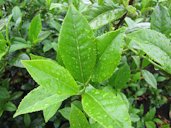
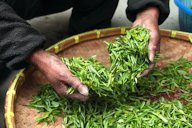
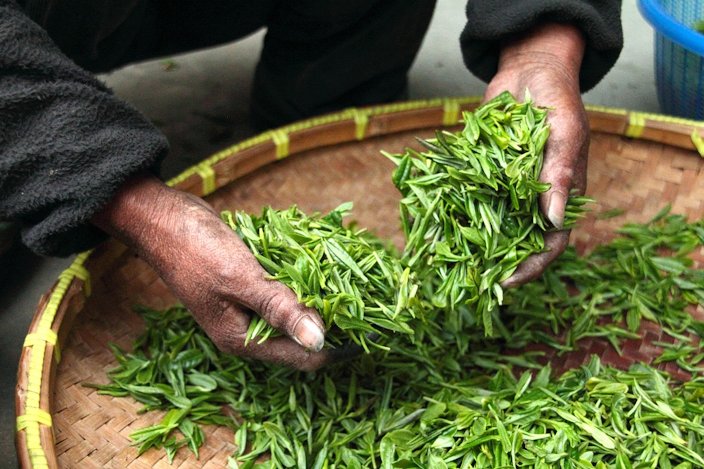
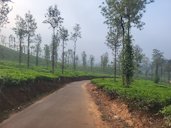
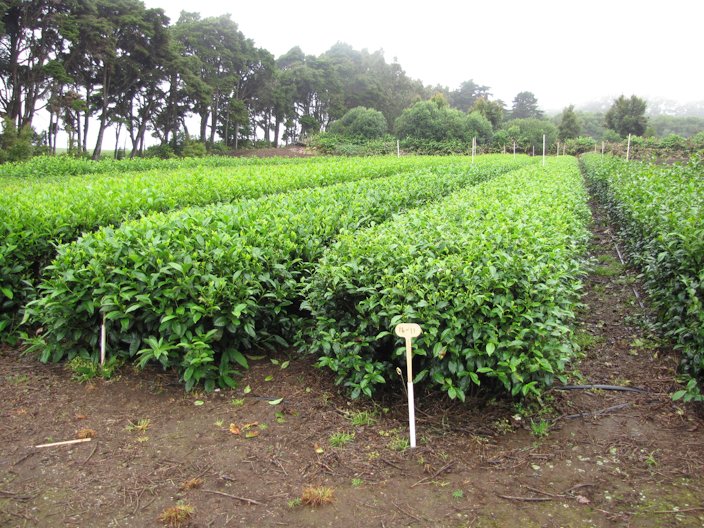
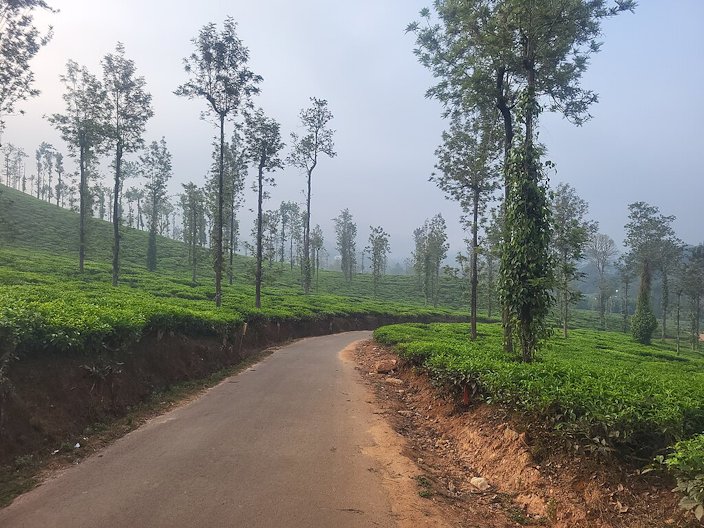
 Fig. 1 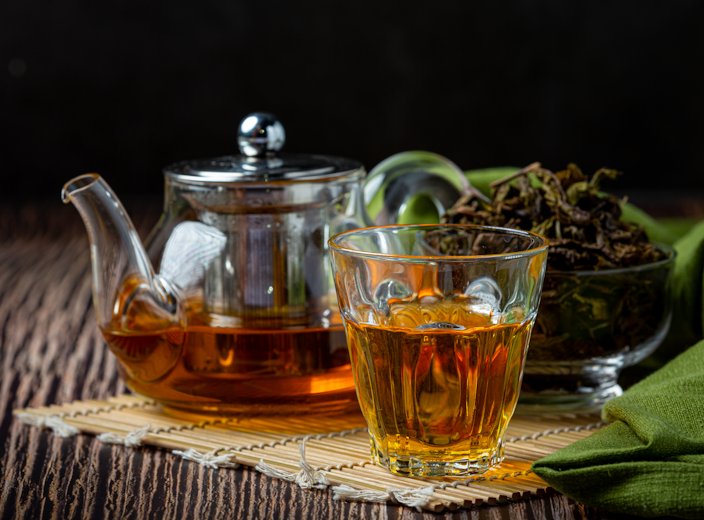 Oolong green tea 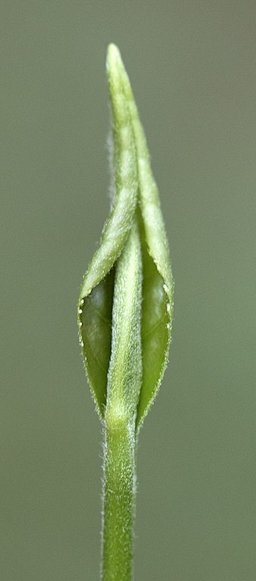 Fig. 2 Bud tip of tea plant (C. sinensis), Espiye, Giresun, Turkey 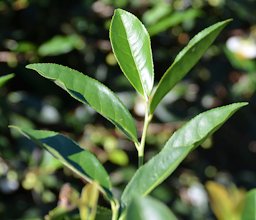 Fig. 3 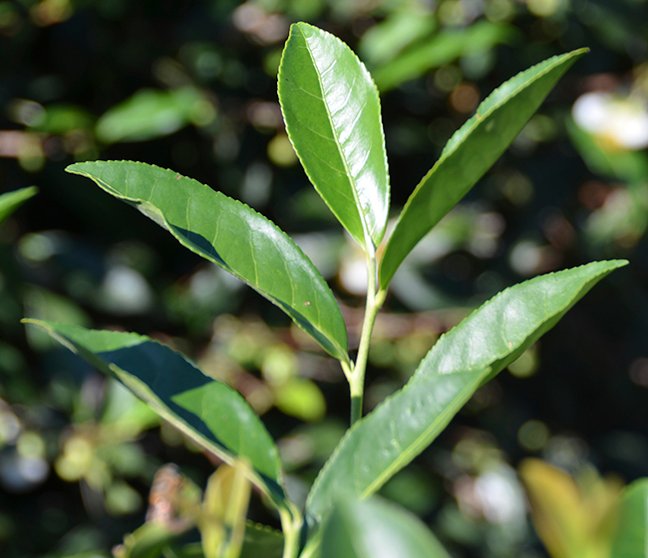 Charleston Tea Plantation Charleston, SC and Strybing Arboretum San Francisco, CA 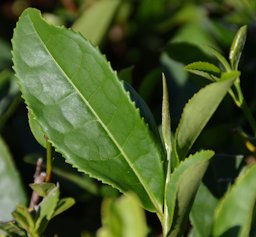 Fig. 4 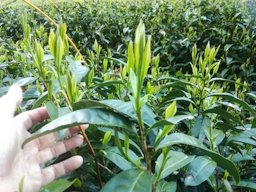 Fig. 5 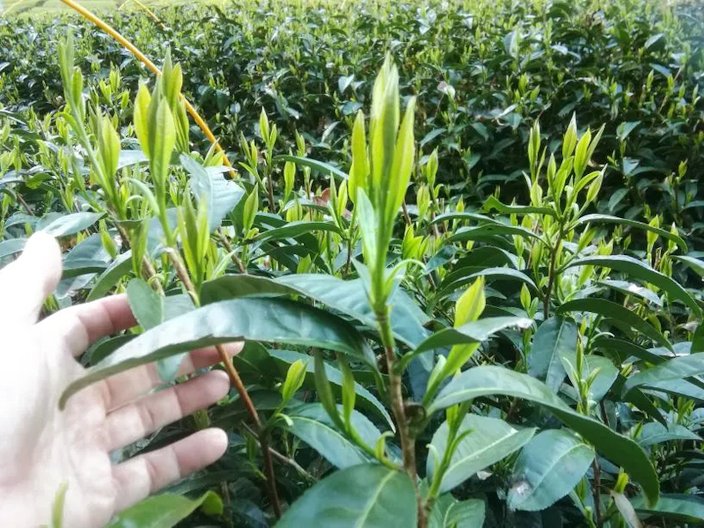 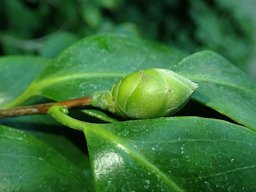 Fig. 9 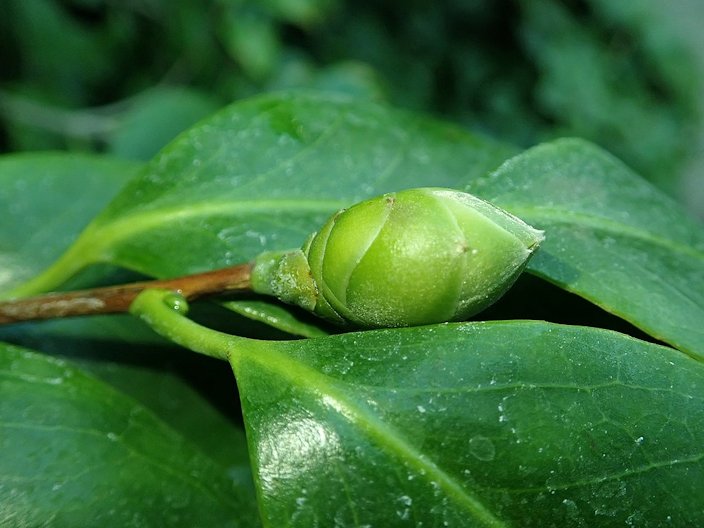 C. sinensis, Dendrological Garden in Przelewice, Poland 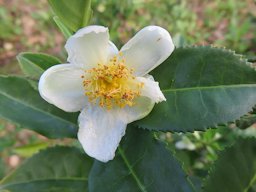 Fig. 10 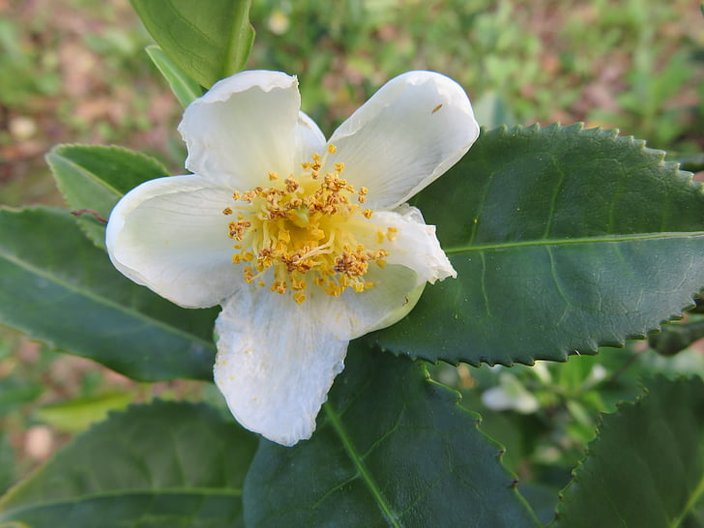  Fig. 11 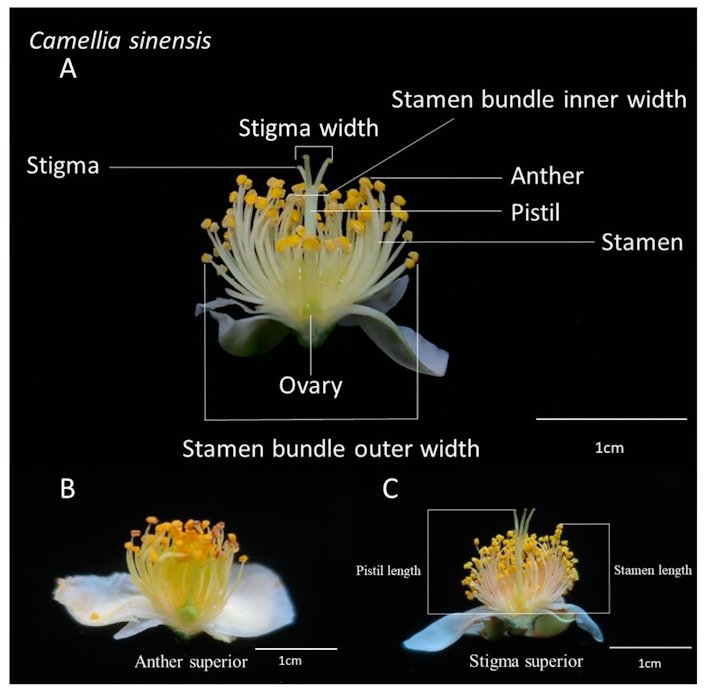 Morphological diagram of the tea (C. sinensis) plant’s floral apparatus. (A) The measured flower organ; (B) the anther superior morphology; and (C) the stigma superior morphology. The positions for measurement of pistil length and stamen length are shown. 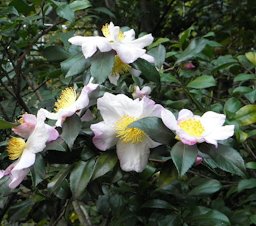 Fig. 12 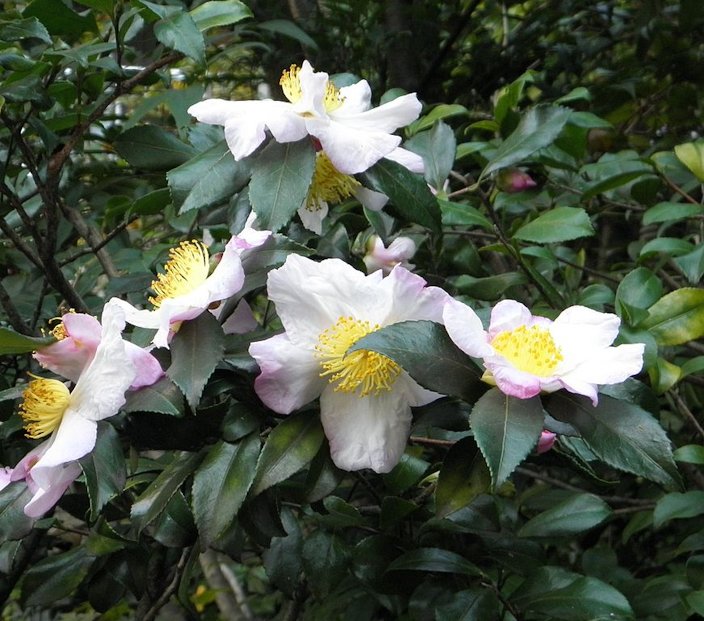 Attractive white flowers with a pinkish tinge and bright yellow stamens  Fig. 17 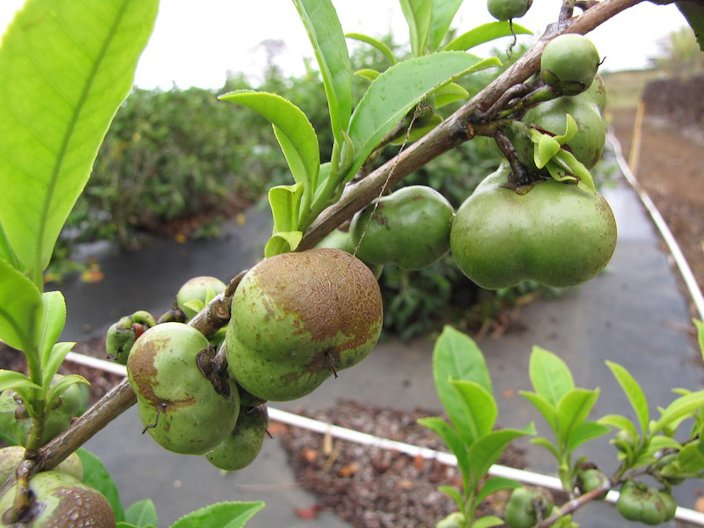 C. sinensis (Tea), fruit, Kula Agriculture Station, Maui, Hawai'i 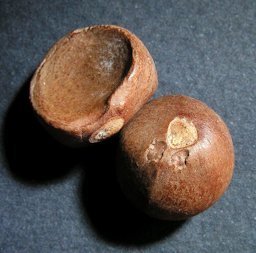 Fig. 18 Fruits of C. sinensis 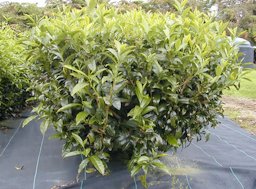 Fig. 21 Tea plant (C. sinensis 'Yabukita') 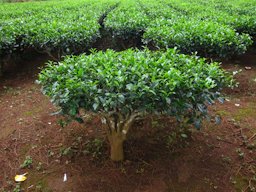 Fig. 22 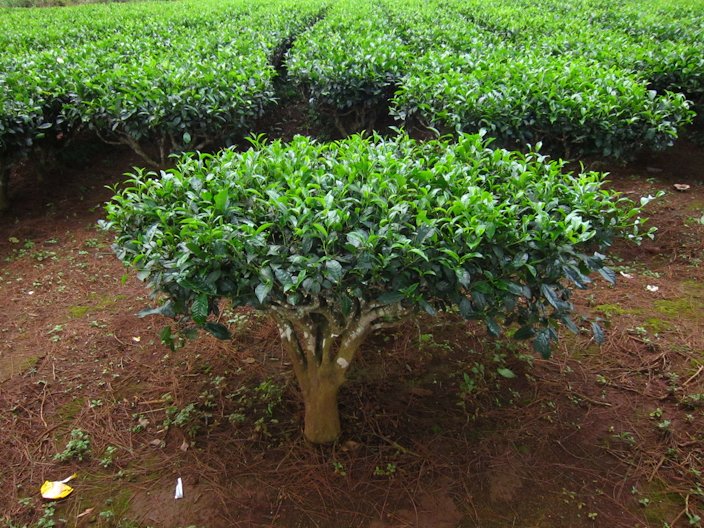  Fig. 23 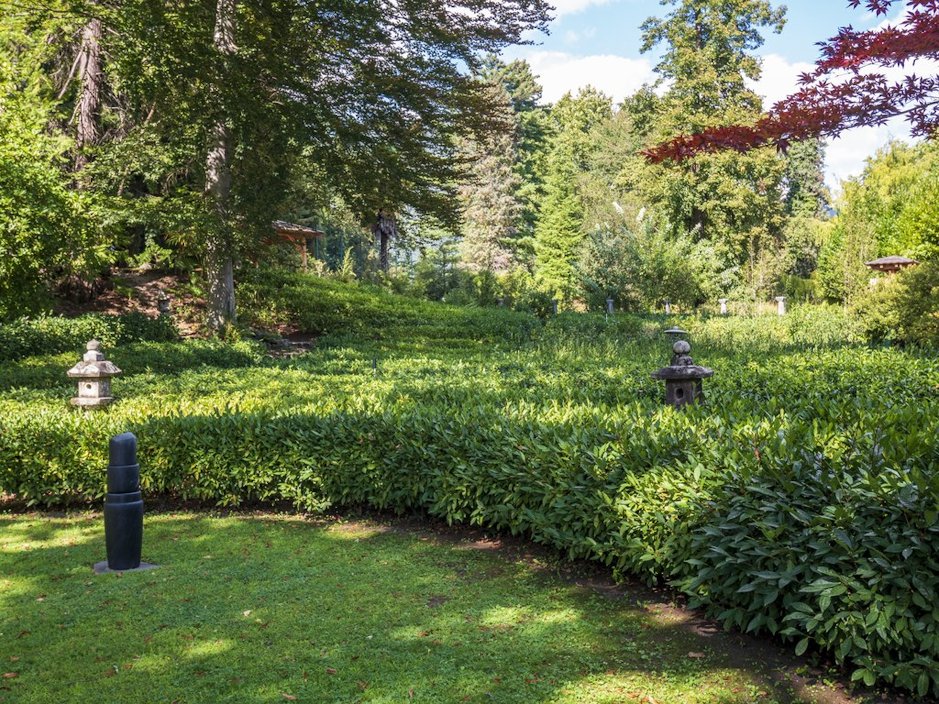 Tea Garden, Monte Verità, Ascona, Switzerland 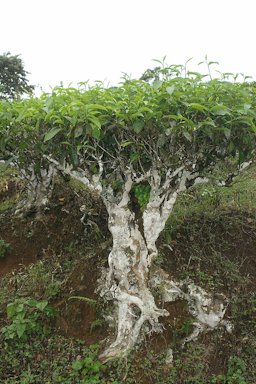 Fig. 24 The root of a tea plant, the plant must be over 100 years old  Fig. 25 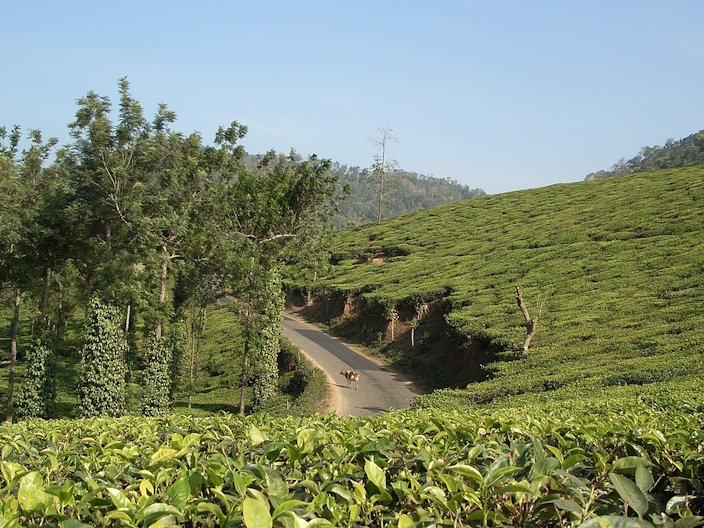 A tea plantation in India 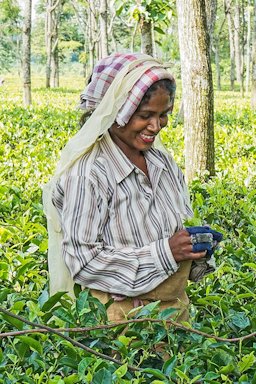 Fig. 26 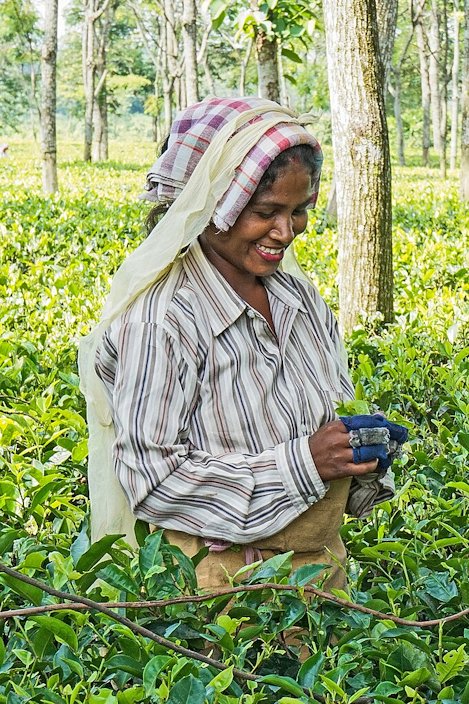 Woman harvesting tea, West Bengal, India  Fig. 27 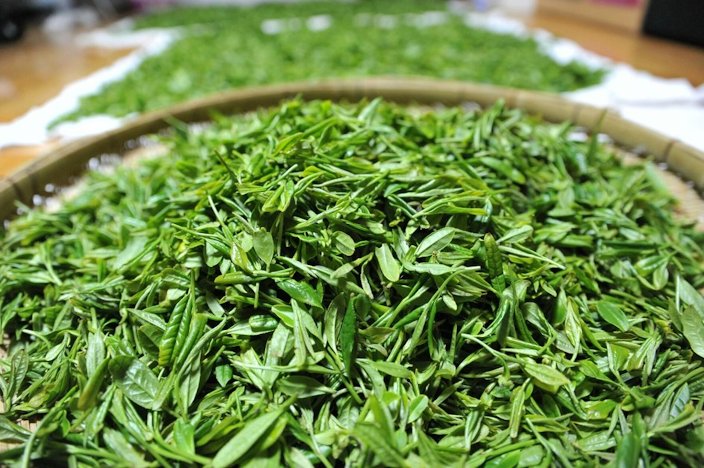 Jakseol green tea leaves, 녹찻잎(작설차) 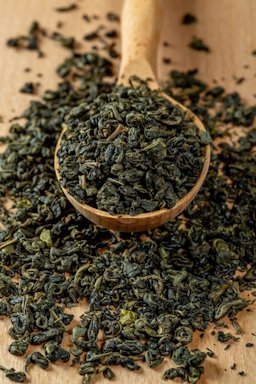 Fig. 28 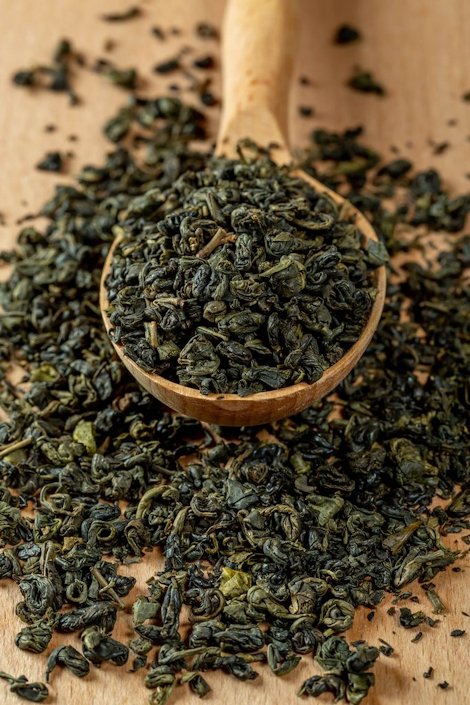 Dried green tea leaves  Fig. 29 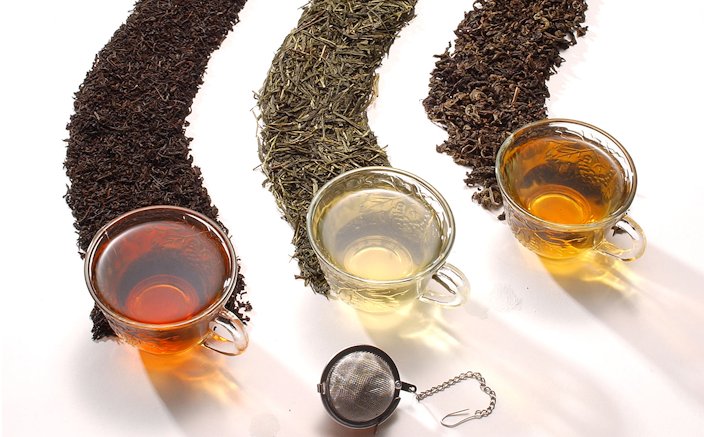 Leaves from the plant Camellia sinensis are processed three different ways to produce the three major classes of tea: black (left), green (center), and oolong 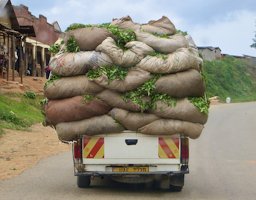 Fig. 39 Transporting fresh harvested tea leaves! Uganda 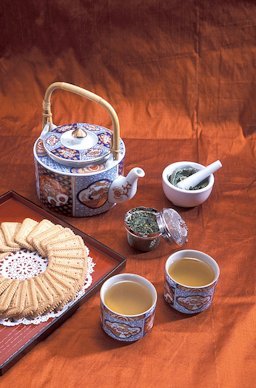 Fig. 47 Next to water, tea is the most consumed beverage worldwide. The source of all nonherbal teas is C. sinensis 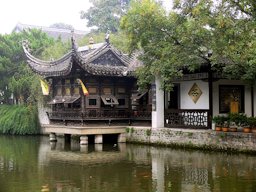 Fig. 54 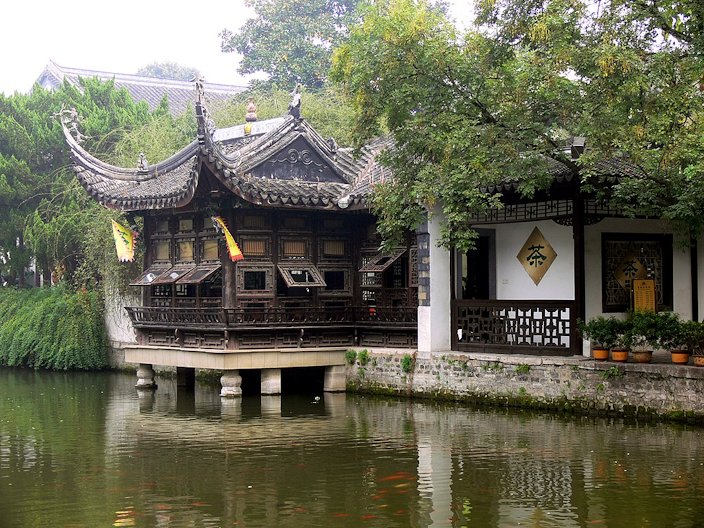 A teahouse in the Nanjing Presidential Palace garden, China 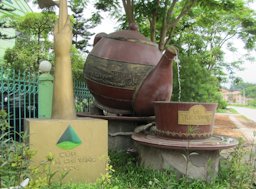 Fig. 66 Giant teapot outside Tân Cương Tea Factory, Thai Nguyen City, Vietnam |
Scientific
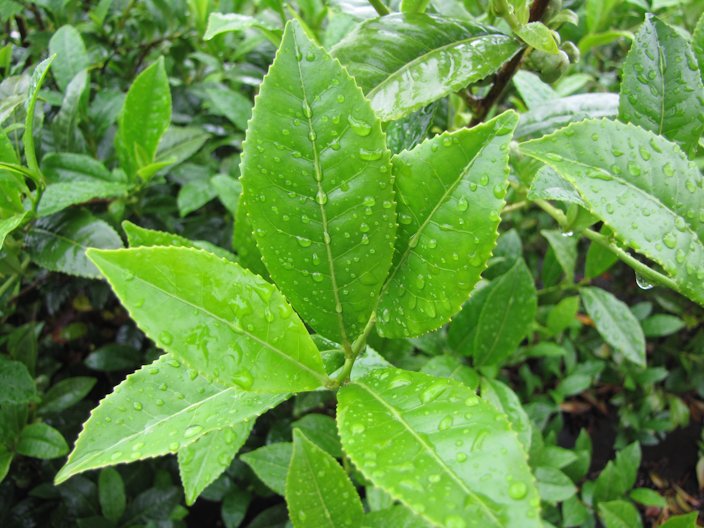
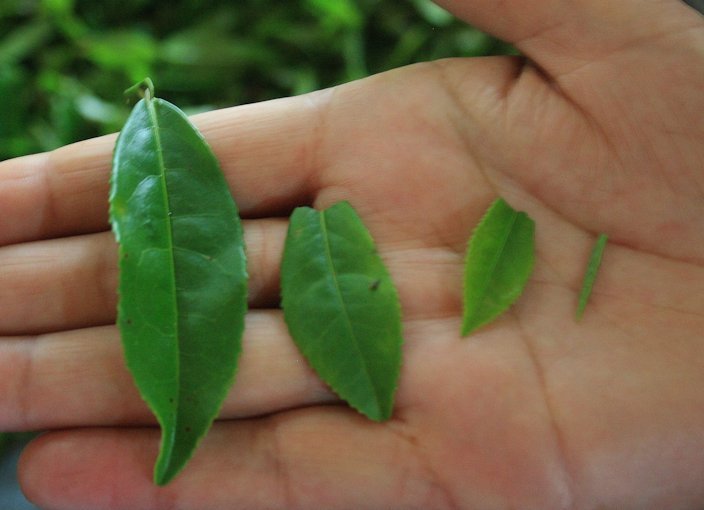
name Camellia sinensis (L.) Kuntze Pronunciation ka-MEE-lee-ah sih-NEN-sis 14 Common names English: tea, tea plant, tea tree; China: cha 茶, French: théier (plant), thé (product); German: Teestrauch; Indonesia and Malaysia: teh; Philippines: tsa (Tagalog); Burma (Myanmar): leppet; Cambodia: taè; Laos: s'a:, hmièngx; Portuguese: chá-da-Índia, chá, chá-preto; Spanish: árbol del té, té; Thailand: cha (central), miang (northern); Vietnam: ch[ef], tr[af] 9,15 Synonyms C. arborescens Hung T.Chang & F.L.Yu, C. chinensis (Sims) Kuntze, C. thea Link, Thea sinensis L., T. sinensis var. macrophylla Siebold 2 Relatives Japanese Camillia. C. japonica, saranqua camellia, C. sasanqua, Franklin tree, Franklinia slatamaha, loblolly bay, Gordonia lasianthus, Japanese stewartia, Stewartia pseudocamillia, Cleyera, Ternstroernia gymnanthera Family Theaceae (tea family); Camelliaceae 3,4 Origin Native to the slopes of the Himalayas and adjoining plains in southern China 4 USDA hardiness zones 9-11 5 Uses Beverage; flavoring; bonsai subject Height Max. 15 ft (5 m) 8 Spread Max. 15 ft (5 m) 8 Crown Rounded Plant habit Evergreen shrub or small tree; China type tea is dwarf; Assam type tea is a larger plant 4 Growth rate 12-24 in. (25-60 cm)/year 8 Trunk/bark/branches Bark grayish brown; branchlets slender, glabrous and purplish 11 Pruning requirement Frequent heading back to keep at 3 to 5 ft (0.9–1.5 m) 4 Leaves China type tea small, dark green, narrow, serrated leaves; Assam type, less serrated leaves 4 Flowers Bisexual; showy; fragrant; white; flowering in the fall 8 Fruit Medium capsule; subglobose-ellipsoid; usually 3 loculed 8,11 Season Starting in spring, multiple harvesting encourage new growth Light requirement Full sun or light shade; Assam tea types benefit from shade more than China tea types 4 Soil tolerance Needs organic soils with good drainage; not adapted to high-pH soils 4,8 pH preference 4.5-5.6 9 Water requirement Tea plants need plenty of moisture; they do best in rather humid climates 5 Flood tolerance Not tolerant of excessively wet or flooded soils conditions 4 Wind tolerance Tea plants and leaves are sensitive to wind 4 Aerosol salt tolerance Not tolerant Soil salt tolerance Not tolerant Cold tolerance Generally survive freezing; leaves may be damaged or killed 4 Temperature requirement 65-86 °F (18.3-29.4 °C) 4 Plant spacing 10-15 ft (3.0-4.6 m) away from trees, other plants and structures 4 Roots Seedlings form a tap root; cuttings have up to 5 main roots 4 Pest/disease resistance Mumerous pests and diseases affect C. sinensis plants Invasive potential * None reported Known hazard None known 8 Reading Material Tea Growing in the Florida Home Landscape, University of Florida pdf Camellia sinensis, Handbook of Energy Crops Camellia sinensis, Floridata Camellia sinensis, PROSEA Foundation Origin Tea (Camellia sinensis) is a native plant to China with more than 3,000 years of cultivation. Like its cousins, sasanqua and Japanese camellias, tea has been grown in the continental United States for more than 150 years. But due to the costs of processing, cultivation and labor, it has never become a large-scale cash crop. 10 History For more than 300 years all the tea drunk in the Western world came from China (100 000 t in 1850), but this monopoly on the international tea market gradually came to an end with the development of tea plantations in India (1840), Sri Lanka (1870) and Indonesia (1880). By 1925 very little of the 300 000 t of tea imported into Europe came from China. Tea exports from China were resumed in quantity in the 1960s. 9 Today, tea production and drinking has spread throughout the world. Camellia sinensis var. sinensis is commonly called China type tea and C. sinensis var. assamica is commonly called Assam type tea. 4 Importance Tea is grown in 45 countries on more than 2.5 million acres worldwide and is worth in excess of $5 billion to the world’s economy annually. Today, about 75 percent of the tea produced worldwide is black; about 23 percent is green; and about 2 percent is oolong. 7 With the introduction and subsequent improvements in mechanical harvesters for tea, and increasing interest in locally grown produce, opportunities for tea production are once again emerging in the United States. As of 2018, tea was cultivated in 17 states on 447.3 ac (181 ha) for an annual domestic production total of 5.6 t. 12 Florida is considered to have suitable areas for tea production, and tea has the opportunity to be a new specialty crop for the southeast region. 12 Tea in the USA, International Journal of Tea Science pdf Description The source of the world's most popular caffeine drink, the tea plant is an evergreen shrub or small tree with glossy dark green elliptic leaves. 5 Historically, tea has been divided into two major types: China and Assam. China-type teas were first domesticated in China, have smaller leaves, are better adapted to full sun, and are generally used to make green teas. Assam-type teas were domesticated in India, have larger leaves, are shade-adapted, and are traditionally used to make black teas. These two original types have been crossed over the centuries, both intentionally and through natural hybridization, so that most modern cultivars have some mixture of the original distinctive traits. Most of the tea plants sold in the US are crosses of plants imported in the 18- and 1900s, and their progeny are not well characterized. 1 Tea leaves are green at harvest. To achieve a variety of taste profiles, manufacturers carefully control whether, and for how long, tea leaves are exposed to air, a process called "fermentation". When "fermentation" is completely arrested, the tea stays "green" or yellowish brown. When "fermentation" time is long, the leaves darken and become "black" tea. Somewhere in between these two extremes, "oolong" tea is created. 7 Note: Most teas, although described as "fermented", are actually oxidised by enzymes present in the tea plant. Pu'er is instead fermented microbially by molds, bacteria and yeasts present on the harvested leaves of the tea plant, and thus is truly fermented. 21 The Chemistry of Tea, Compound Interest pdf Leaves Alternate, simple, lustrous, dark green serrated leaves light green below; var. assamica have larger 3-5" less serrated leaves; var. sinensis leaves are 2-3" long. Young leaves are sparsely hairy then become glabrous with age. 14 The terminal 2 to 3 leaves plus terminal bud are used to make tea. 4 The quality of processed tea is positively correlated with the degree of pubescence on the underside of young leaves and with the 'greenness' of mature leaves (dark and pale green leaves give poor quality). 9
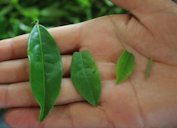
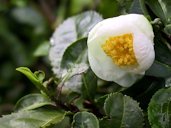
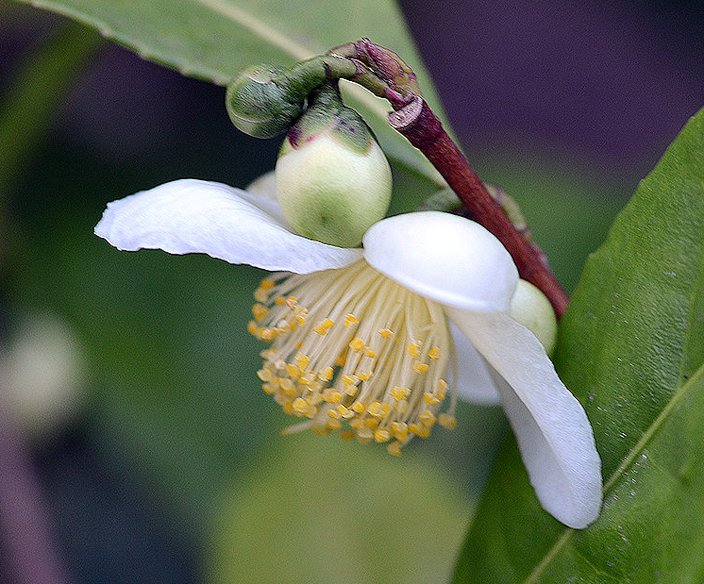
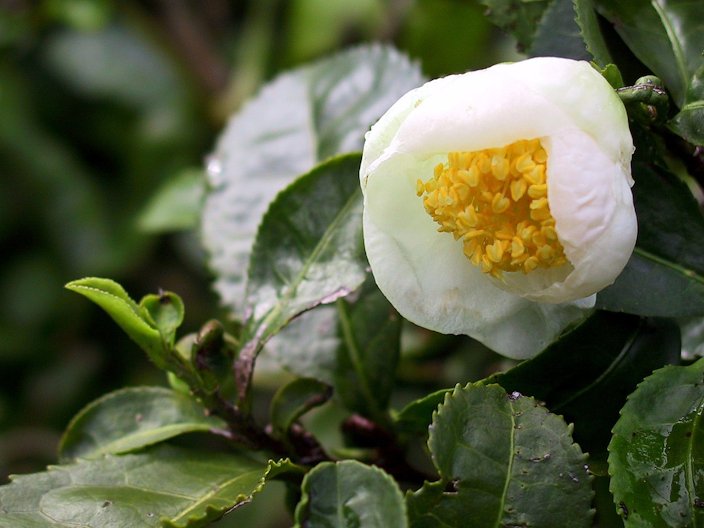
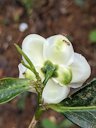
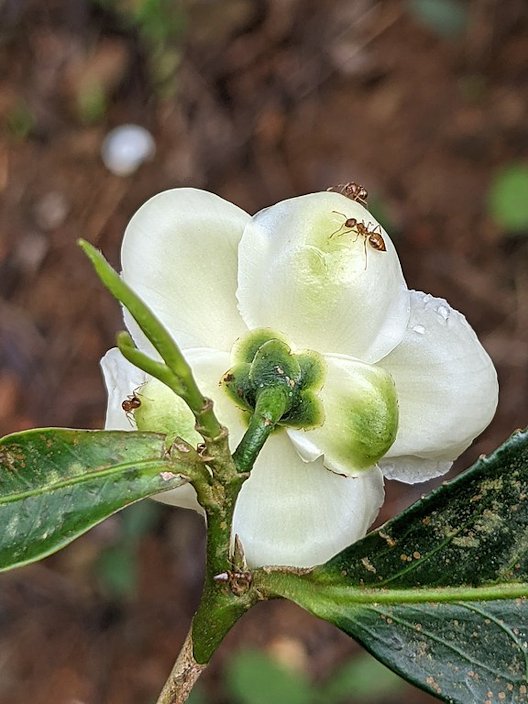
Fig. 6. C. sinensis (Tea), leaves, Kula Agriculture Station, Maui, Hawai'i Fig. 7. Fresh, still undried tea leaves of different qualities in a hand; Happy Valley Tea Estate at Darjeeling, India Flowers Flowers arise from leaf axils and may be held singly or in clusters. 4 Tea plants bloom in the autumn with fragrant, nodding cup shaped flowers about 1 in (2.5 cm) wide. The seven or eight petals are white. 5 Flowering starts when plants are about 4 years old. 14 In the tropics flowering in non-plucked tea occurs year-round. 9
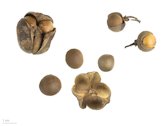
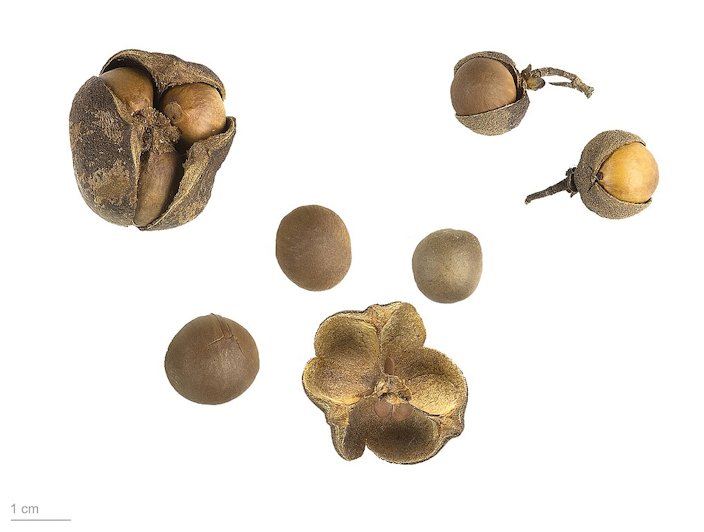
Fig. 13. C. sinensis, Dendrological Garden in Przelewice, Poland Fig. 14. Thea sinensis: a tea flower, Kyoto, Japan Fig. 15. C. sinensis, flower and leaves, Wayanad, India Pollination Tea flowers are largely, if not completely, self-sterile and require cross-pollination by insects to produce seed. 3 Flowers are pollinated mainly by insects (e.g. bees). Only cross-pollination gives good fruit set and seed, especially in var. assamica, which appears to have a system of self-incompatibility. 9 Fruit 3-lobed smooth fruit begins green maturing to dark brown and cracks open to reveal 3 rounded-cuneate seeds. Seeds can take up to 12 months to develop from bud blossom to mature fruit. 14
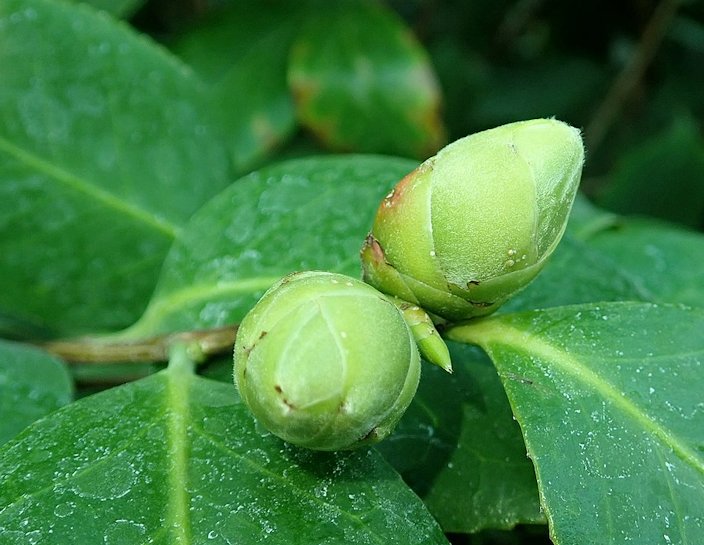
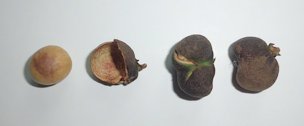
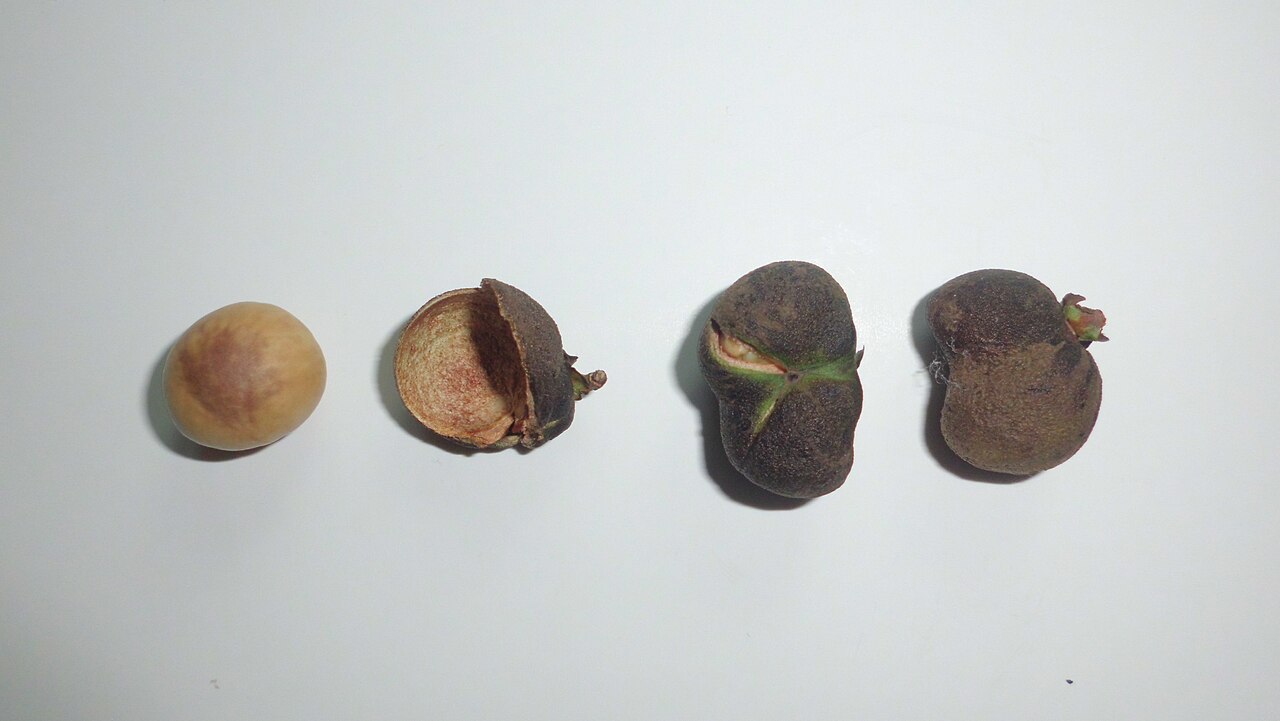
Fig. 19. C. sinensis, tea plant, seeds Fig. 20. Dried tea fruit, from left to right: tea fruit seed, empty tea fruit hull, slightly cracked tea fruit, and dry intact tea fruit Harvesting Terminal sprouts with 2-3 leaves are usually hand-plucked, 22 pds (10 kg) of green shoots (75-80% water) produce about 5.5 pds (2.5 kg) dried tea. Bushes are plucked every 7-15 days, depending on the development of the tender shoots. 3 A small amount (about 1/2 lb; 227 g) of tea may be produced from a single tea bush. 4 Most tea is still harvested manually by plucking the fresh shoot tips as they appear above the plucking table. The best quality of processed tea (flavour and strength) is achieved by light or 'fine' plucking, which includes only active shoots with 2 young leaves and the bud or pecco. Hard or 'coarse' plucking of 3 young leaves and the pecco increases yield at the expense of quality. 9 As the harvestable unit of the tea plant is the immature leaves, tea can be harvested at any stage of plant development. 12 Varieties Two principal varieties are used: the China plant (Camillia sinensis var. sinensis), used for most Chinese, Formosan and Japanese teas (but not Pu-erh); and the clonal (Assam) (Camillia sinensis var. assamica) tea plant, used in most Indian and other teas (but not Darjeeling). Within these botanical varieties, there are many strains and modern Indian clonal varieties. Leaf size is the chief criterion for the classification of tea plants, with three primary classifications being: Assam type, characterized by the largest leaves; China type, characterized by the smallest leaves; and Cambod, characterized by leaves of intermediate size. 17 Camellia sinensis var. sinensis is hardier than Assam tea, and has relatively small and narrow leaves. Its leaves are used to produce green tea and China black tea. C. sinensis var. assamica is much taller in its natural state (than when cultivated) and can grow into a loosely branched tree to a height of about 55.6 ft (17 m.) It is a less hardy variety with larger, rather droopy, leathery leaves, which are used to make Assam (Indian) black tea. 16
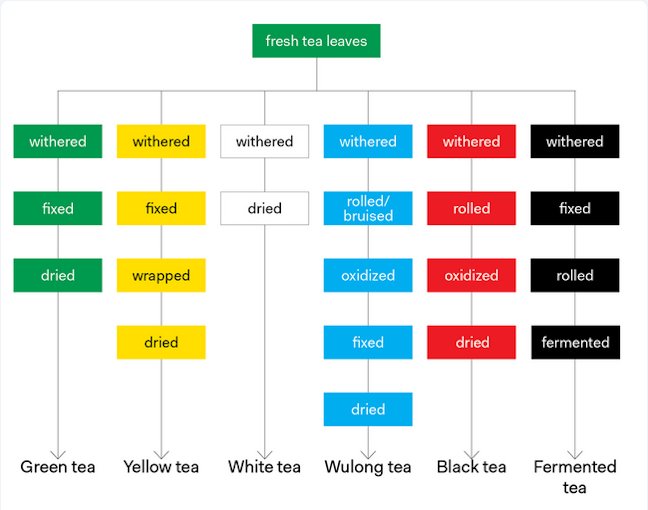
Green teas (un-oxidized) Green tea is made from fresh leaves that are steamed and wilted, then dried immediately. 17 Gunpowder teas consist of little tightly rolled balls of young leaves; they produce a pale-colored green tea known for its sharp, distinctive flavor. Imperial is like Gunpowder but with larger, looser pieces of leaf. 5 Oolong tea (partially oxidized) Oolong sometimes written as wu long or wulong is a traditional Chinese tea (Camellia sinensis) produced through a unique process including withering under the sun and oxidation before curling and twisting. Most oolong teas, especially those of fine quality, involve unique tea plant cultivars that are exclusively used for particular varieties. 18 Different varieties of oolong are processed differently, but the leaves are formed into one of two distinct styles. Some are rolled into long curly leaves, while others are 'wrap-curled' into small beads, each with a tail. 18 Black teas (oxidized) Black tea is made from leaves that are wilted and crushed in rollers, then allowed to oxidize for several hours before they are dried. 17 They are graded by the size of the particles. This is important since larger pieces take longer to brew. The Pekoe teas are supposedly the highest quality black teas, made from the youngest, "first flush" of leaves. Orange Pekoe is the best, made into long, thin, twisted leaves; regular Pekoe tea leaves are more open. Souchong teas are black teas with larger open, coarse leaves. 5 Black tea is often blended and mixed with various other plants in order to obtain a beverage. 17 Earl Grey is a black tea flavored with oil of bergamot (a type of sour orange, Citrus aurantium). Teas are sometimes flavored with jasmine flowers, orange blossoms (Citrus sinensis), rose petals, apples or mangos. In India they mostly make black teas, including the full-bodied Assam tea and the delicate Darjeeling, sometimes called the "champagne of teas". 5 Pu'er Tea (fermented) (普洱茶) All Pu-erh teas undergo some oxidation during sun drying and then become either 1) fully fermented with microbes during a processing phase which is largely anerobic, i.e. without the presence of oxygen. This phase is similar to composting and results in Shu (ripened) Pu-erh, or 2) partly fermented (by microbes) and partly oxidized during the natural aging process resulting in Sheng (raw) Pu-erh. The aging process is controlled by the owner and thus the degree of fermentation and oxidization achieved depends on how the Sheng Pu-erh is stored. 17 All types of pu-erh tea are created from máochá (毛茶]]), a mostly unoxidized green tea processed from a "large leaf" variety of Camellia sinensis (C. sinensis var. assamica or C. taliensis) found in the mountains of southern Yunnan, China. 19 Maocha can be sold directly to market as loose leaf tea, compressed to produce "raw" Sheng Cha, naturally aged and matured for several year before being compressed to also produce "raw" Sheng Cha or undergo Wo Dui ripening for several months prior to being compressed to produce "ripe" Shou Cha. 19
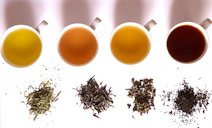
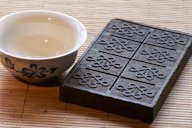
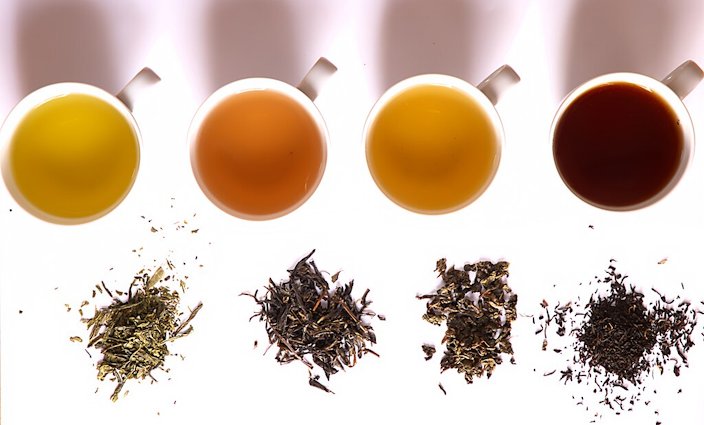
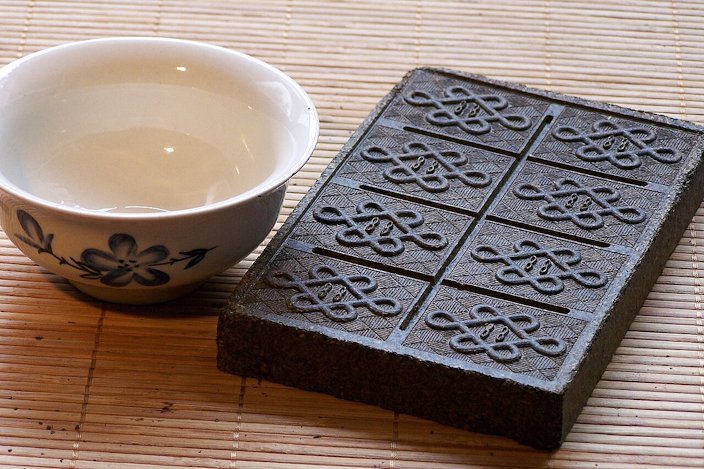
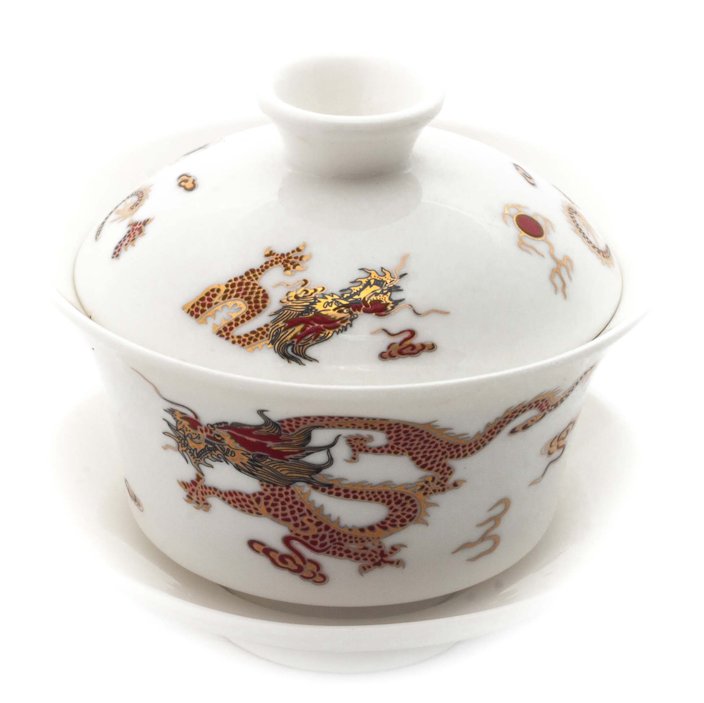
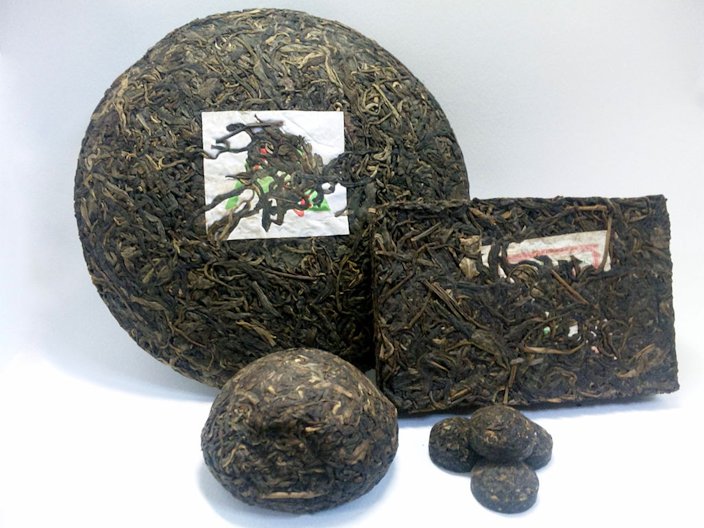
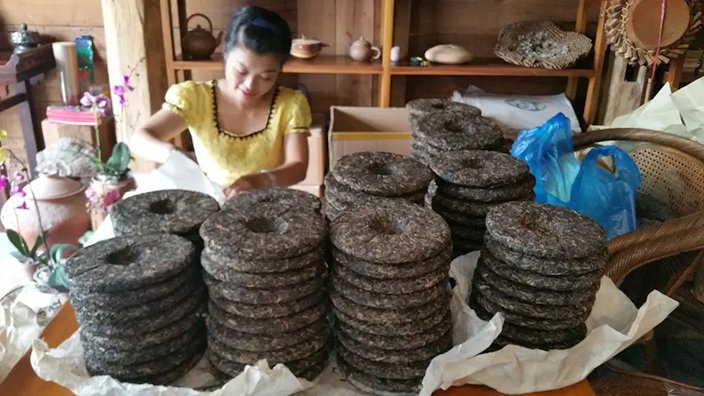
Fig. 30. Tea of different fermentation: Green tea (Bancha from Japan), Yellow tea (Kekecha from China), Oolong tea (Kwai flower from China) and Black tea (Assam Sonipur Bio FOP from India) Fig. 31. Brick tea - Most tea bricks 'Zhuan Cha’ are from Southern Yunnan in China, and parts of Sichuan Province. Tea bricks are made primarily from the broad leaf 'Dayeh' Camellia Assamica tea plant. Tea leaves have been packed in wooden moulds and pressed into block form. Fig. 32. Gaiwan, three piece tea cup for loose tea leaves Fig. 33. Tea bricks, tea cakes, tea lumps, and tea nuggets; can be raw (sheng) or ripe (shou) pu-erh Fig. 43. Pu-erh tea wrapping Storage Storage conditions determine the shelf life of tea; that of black teas is greater than that of green teas. Some, such as flower teas, may last only a month or so. Others, such as pu-erh, improve with age. To remain fresh and prevent mold, tea needs to be stored away from heat, light, air, and moisture. Tea must be kept at room temperature in an air-tight container. Black tea in a bag within a sealed opaque canister may keep for two years. Green tea deteriorates more rapidly, usually in less than a year. Tightly rolled gunpowder tea leaves keep longer than the more open-leafed Chun Mee tea. 20
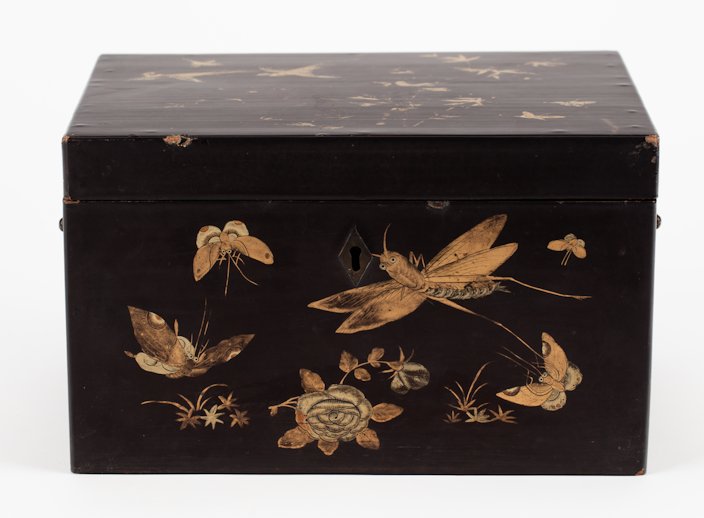
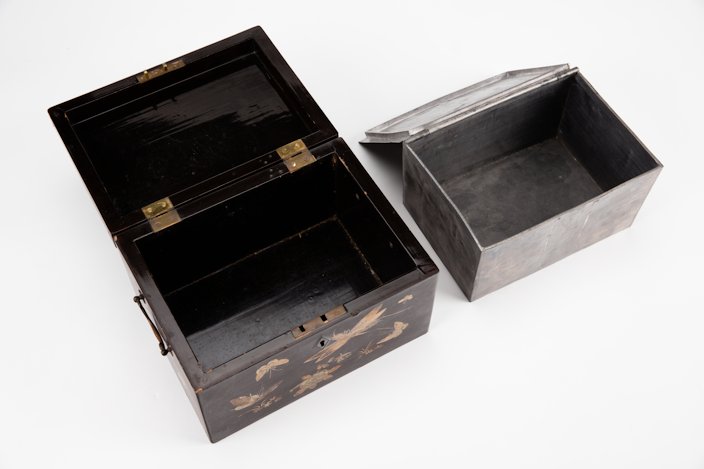
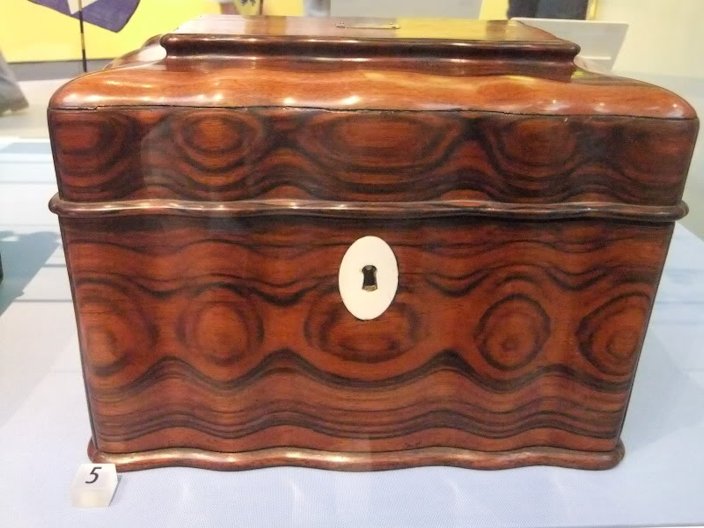
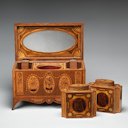
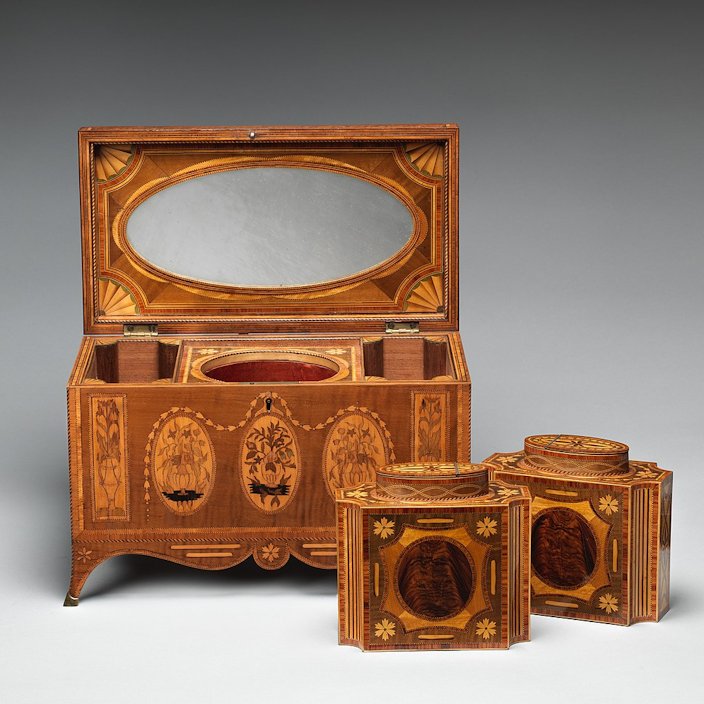
Fig. 35,36 Lacquered tea caddy with Asian decorative motifs; metal insert for the tea Fig. 37. Wooden tea caddy from China on display at the Museum of Liverpool, England Fig. 38. British Tea chest with tea caddies,Metropolitan Museum of Art Propagation Tea may be propagated by seed; however, seed lose viability shortly after collection. Fresh seed should be pre-germinated. Tea may also be propagated by cuttings with 1 to 3 leaves. 4 Both seedlings and cuttings are used as planting material for tea. Green, semi-hardwood cuttings with a full leaf, taken from primary shoots, are the best. 9 Germinating Tea Seeds (Camellia sinensis), University of Hawai'i at Mānoa pdf In-Tray Procedure for Rooting Tea Cuttings, University of Hawai'i at Mānoa pdf Culture Tea is not killed by the night frost that occurs in important tea-growing areas at higher latitudes. China-type teas are more tolerant of colder climates. Daylength does not have a large influence on seasonal variation in growth (yield) or flowering. 9 Soils suitable for tea cultivation should be free-draining, have a depth of 2 m, a pH between 4.5 and 5.6, a texture of sandy loam to clay and good water-holding capacity. 9 The southeastern region of the United States shares similar climate and soil conditions with tea production centers in southeastern Asia. Tea is a perennial crop that has about 100 years of productivity once established. Tea growers can harvest tea 15 to 20 times per year. 10 Developing Tea as a Cash Crop for the Southeast, Specialty Crop Grower Pruning Commonly, the shoots of tea are headed back repeatedly to form a flat-topped (table) bush of no more than 3 to 5 ft (0.9–1.5 m). In addition, the bush is periodically cut back to induce new growth. Once the tea bush has reached 5 to 6 feet (1.5–1.8 m) it should be cut back to 2 to 4 feet (0.6–1.2 m), to rejuvenate the bush and to maintain it at a manageable level. 4 Pruning objectives: frame formation of young plants, final shaping of the plucking table, maintenance pruning: at 2—5 year intervals and collar or down pruning to rejuvenate very old tea bushes. 9 Fertilizing Tea plants benefit from frequent applications of small amounts of fertilizer. Tea should be fertilized with a complete dry fertilizer mix including nitrogen, phosphate, potash, and magnesium. Foliar nutritional applications should be applied 3 to 4 times during the warmer parts of the year. 4 Irrigation Tea plants should be watered frequently during dry periods. The frequency of watering may be decreased during the cool fall and winter period. 4
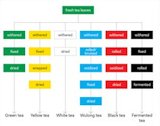
Fig. 40. This chart outlines the minimum steps that fresh tea leaves must go through to be considered a tea of a specific category. 17 Processing Tea Leaves Home-Processing Black and Green Tea (Camellia sinensis), University of Hawai'i at Mānoa pdf Small-scale tea growing and processing in Hawai'i, University of Hawai'i at Mānoa pdf Performance of Seven Tea Accessions in North-central Florida: Correlations between Potential Yield and Growth Parameters over 2 Years, HortTechnology pdf Pests Numerous insect species have been reported to attack tea plants including mites, thrips, scales, aphids, and caterpillars. 4 Diseases Similarly numerous disease, causing organisms have been reported to attack tea plants such as blister blight (Exobasidium vexans), net blister blight (E. reticulum), anthracnose (Colletotrichum thea-sinensis), and red rust (Cephaleuros parasiticus). 4 Tea Plantations
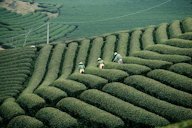
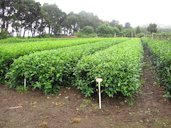
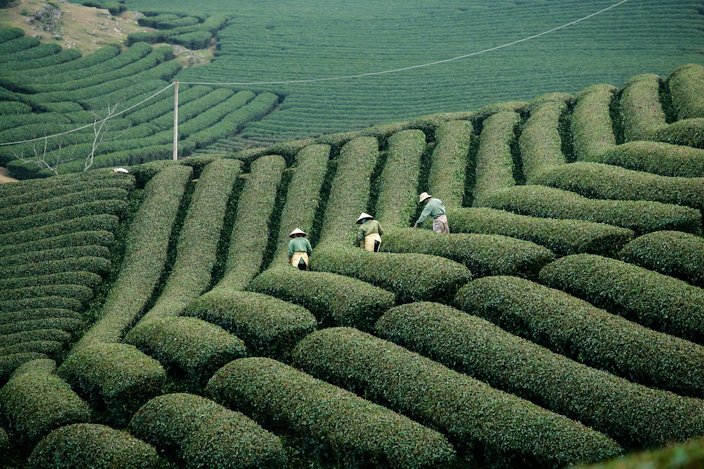
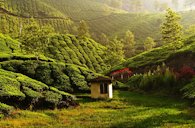
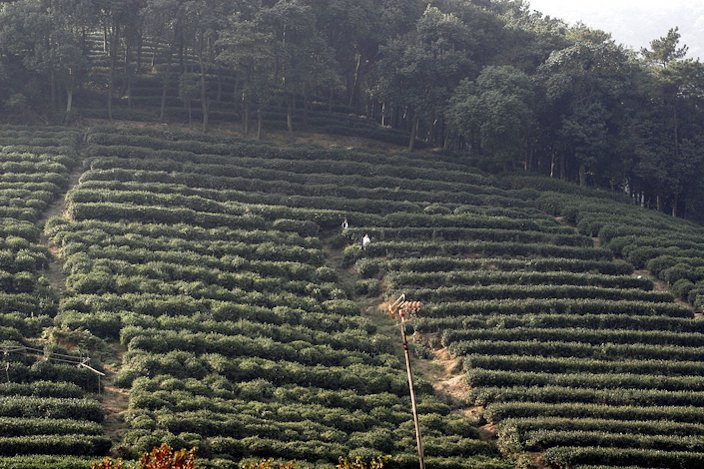
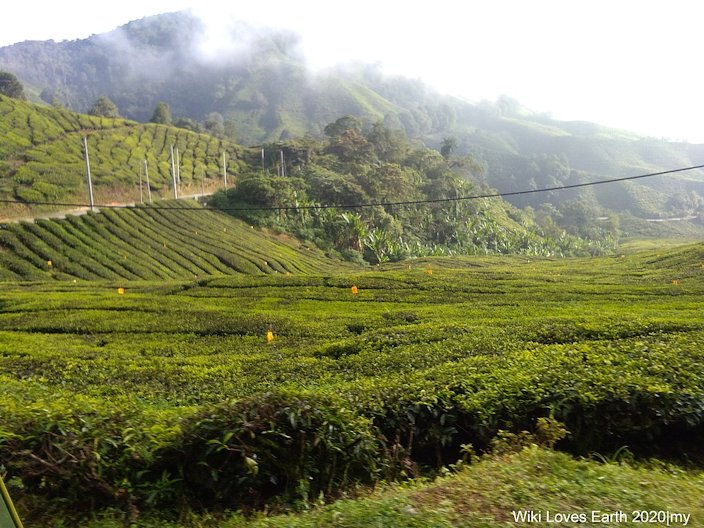
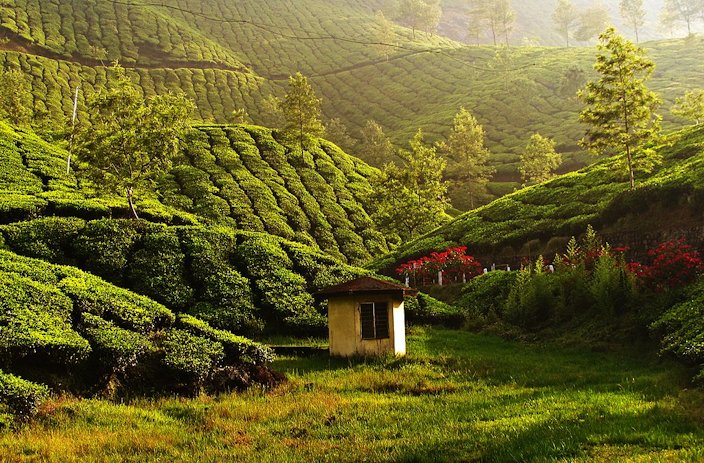
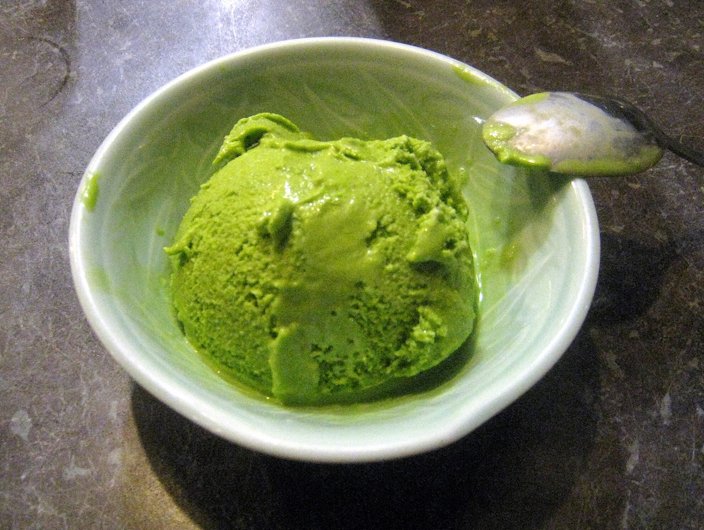
Fig. 41. Tea plantation in Vietnam Fig. 42. Crop trials Mealani Ag Station Waimea, Hawaii, Hawai'i Fig. 43. Tea plantation in Vythiri, Kerala, India Fig. 44. Tea bushes C. sinesis in Hangzhou (China, Province Zhejiang). Longjing (Dragon Well Tea) Fig. 45. BOH Sungei Palas Tea Plantation, Cameron Highlands, the largest tea plantation in Malaysia Fig. 46. Tea estate in Munnar, Kerala, India Food Uses In addition to its nearly universal popularity as a beverage, tea also is used as a flavoring in various foods, including ice cream, fish and meat dishes. 5
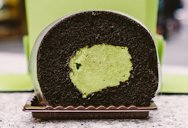
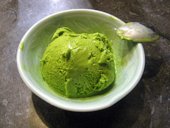
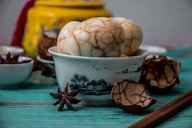
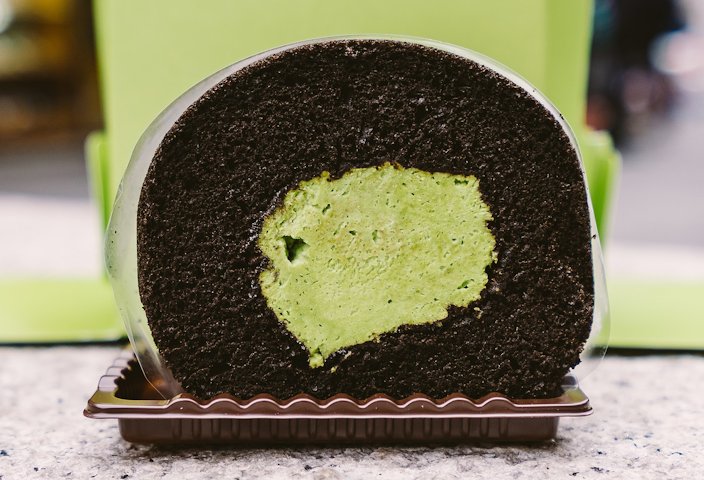
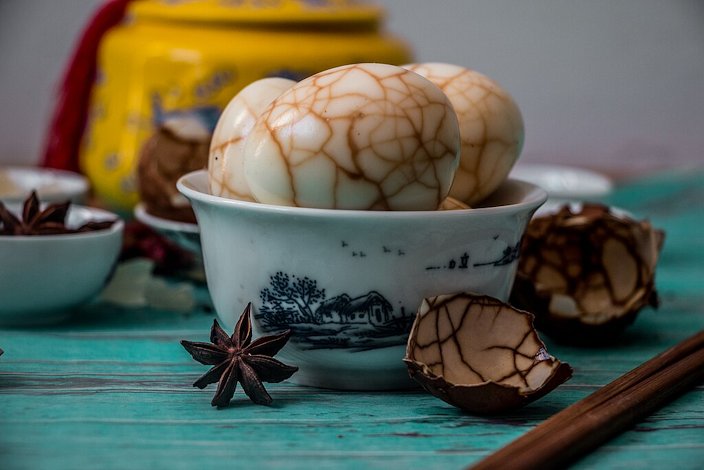
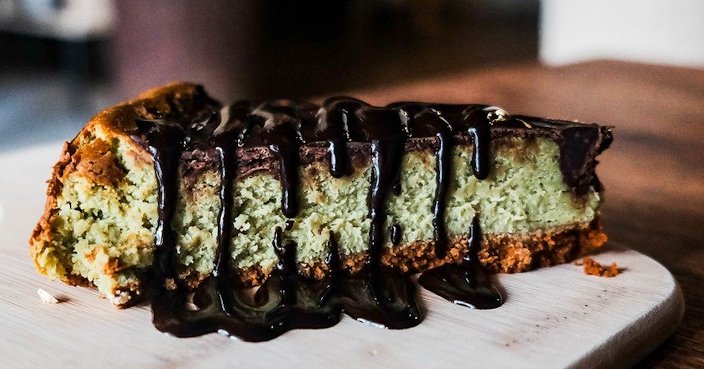
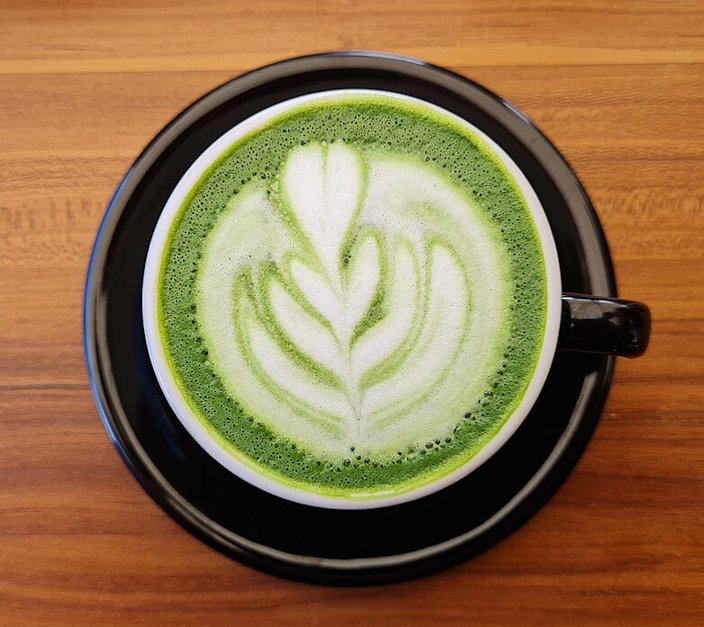
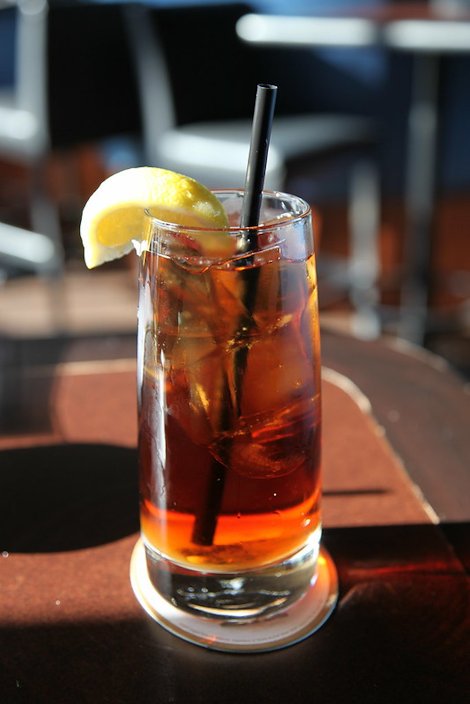
Fig. 48. Green tea roll cake, Seoul, Korea Fig. 49. Green tea ice cream Fig. 50. Chinese boiled eggs in black tea Fig. 51. Matcha cheesecake with chocolate fudge Fig. 52. A mug of matcha tea latte with "Rosetta" latte art served in restaurant in Sukabumi Regency, West Java, Indonesia Fig. 53. Iced tea with lemon Steeping/Brewing Tea Some tea sorts are often brewed several times using the same leaves. Historically in China, tea is divided into a number of infusions. The first infusion is immediately poured out to wash the tea, and then the second and further infusions are drunk. The third through fifth are nearly always considered the best infusions of tea, although different teas open up differently and may require more infusions of hot water to produce the best flavor. 17 One way to taste a tea, throughout its entire process, is to add hot water to a cup containing the leaves and after about 30 seconds to taste it. As the tea leaves unfold (known as "The Agony of the Leaves"), they give up various parts of themselves to the water and thus the taste evolves. Continuing this from the very first flavors to the time beyond which the tea is quite stewed will allow an appreciation of the tea throughout its entire length. 17 The best temperature and time for brewing tea depends on its type. 17 Medicinal Properties ** In China, the medicinal effects of tea have a history dating back almost 5,000 years. The use of tea in traditional Chinese medicine is well documented and it is suggested that it could be used as a cure for over 200 illnesses. 16 The last decade has seen huge interest in tea's medicinal properties. Tea contains the compound theophylline, which is used in a licensed medicine for the treatment of respiratory diseases such as asthma. 16 Tea also contains flavonoids, compounds reported to have anti-oxidant properties and which may be beneficial to health, such as in the prevention of heart disease and cancer. Tea flavonoids are also reported to reduce inflammation and to have antimicrobial effects. 16 The antioxidants in tea (various polyphenols) are more effective at neutralizing damaging free radicals than those in other foods. Decaffeinated tea has just as much antioxidant activity as normal tea, and adding milk, lemon juice or sugar does not reduce the antioxidant effects either. Powdered instant teas and bottled iced teas do contain fewer antioxidants than brewed tea, but still more than most individual fruits and vegetables. 5 Other Uses Air-dry tea seed yields a clear golden-yellow oil resembling sasanqua oil, but the seed cake, containing saponin, is not suitable for fodder. Refined teaseed oil, made by removing the free fatty acids with caustic soda, then bleaching the oil with Fuller's earth and a sprinkling of bone black, makes an oil suitable for use in manufacture of sanctuary or signal oil for burning purposes, and in all respects is considered a favorable substitute for rapeseed, olive, or lard oils. The oil is different from cottonseed, corn, or sesame oils in that it is a non-drying oil and is not subject to oxidation changes, thus making it very suitable for use in the textile industry; it remains liquid below 64.4 °F (18 °C). 4 Around the world tea houses
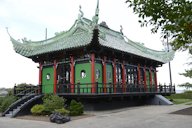
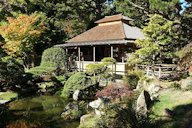
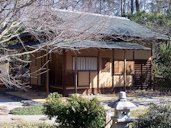
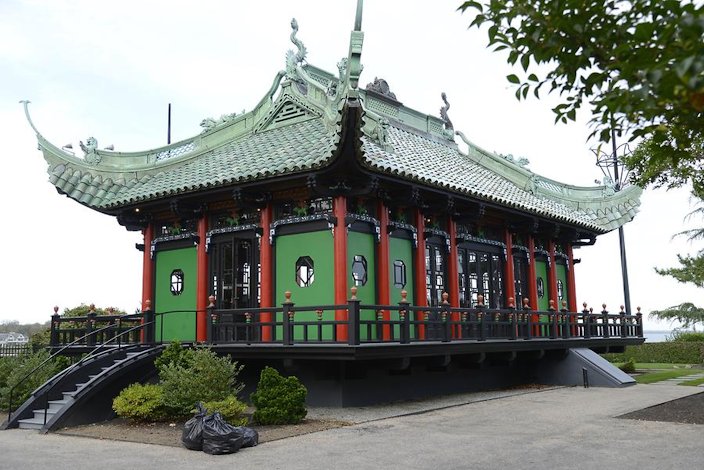
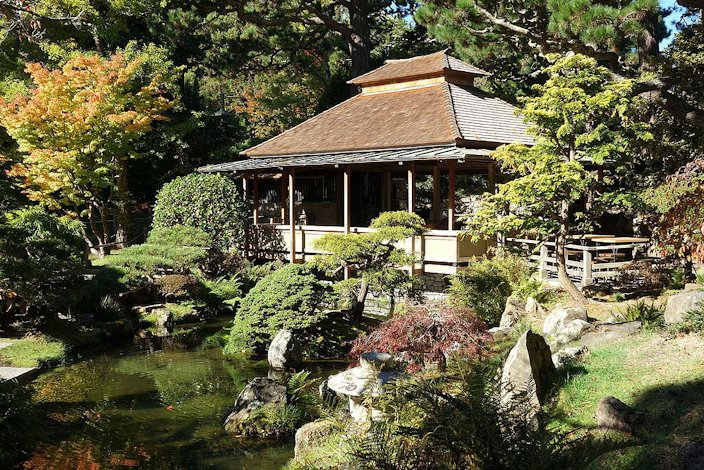
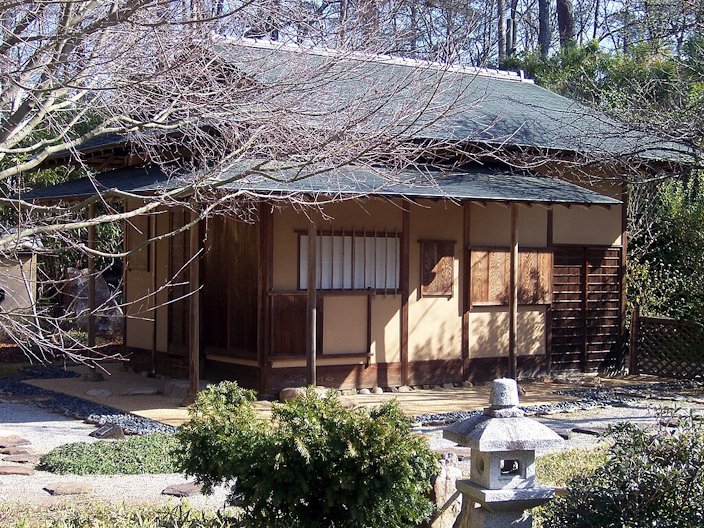
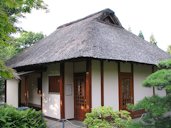
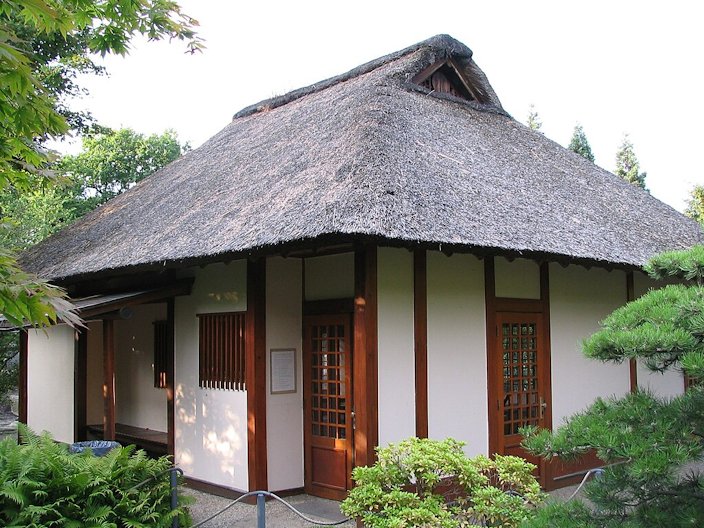
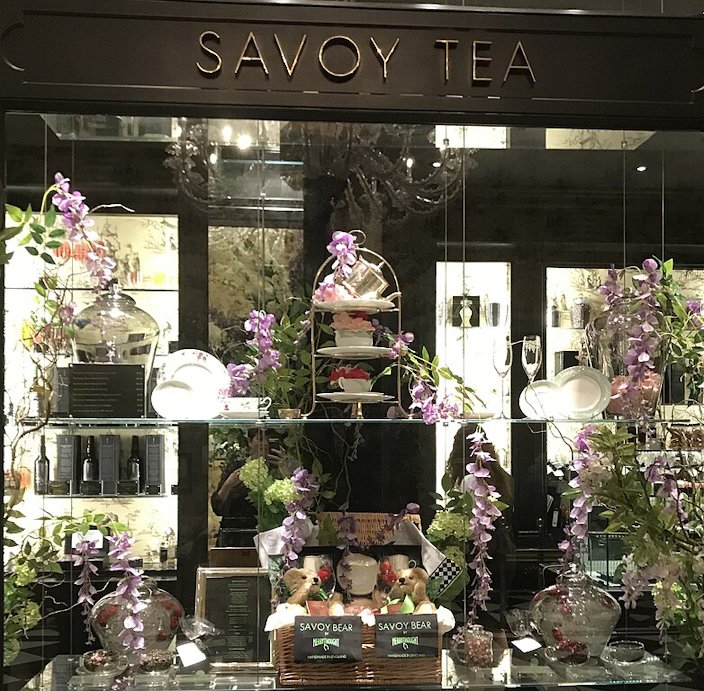
Fig. 55. Marble House, Chinese Tea House, Newport, USA Fig. 56. Japanese Tea Garden, Golden Gate Park, San Francisco, California, USA Fig. 57. The Tea House within the 7.5 acre Japanese Garden at the Birmingham Botanical Gardens in Birmingham, Alabama USA Fig. 58. Tea house in Japanese garden, Hamburg, Germany Fig. 59. Interior shot of the Russian Tea Room restaurant in New York City, USA Fig. 60. Savoy Hotel, Tea Shop, London General Tea (the beverage - not the plant) was introduced into Europe in the middle 16th century. By the 1700's it began to replace beer as the beverage of choice at breakfast. 5 The name sinensis means "from China" in Latin. The United Nations General Assembly proclaimed 21 May as International Tea Day. 6
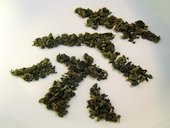
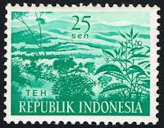
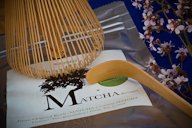
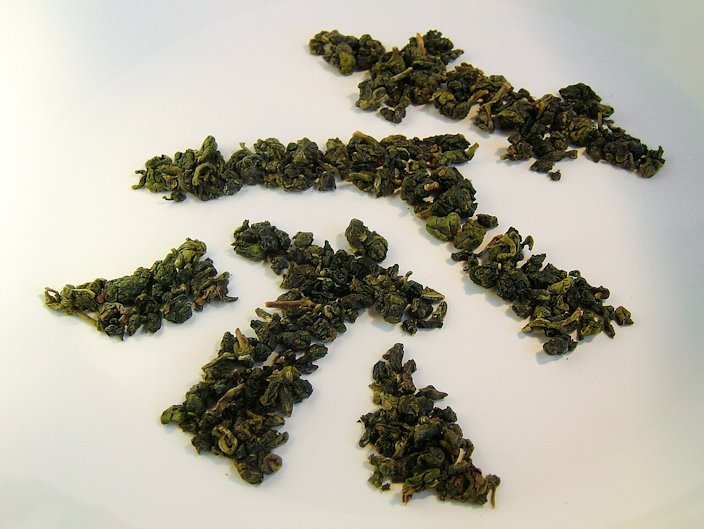
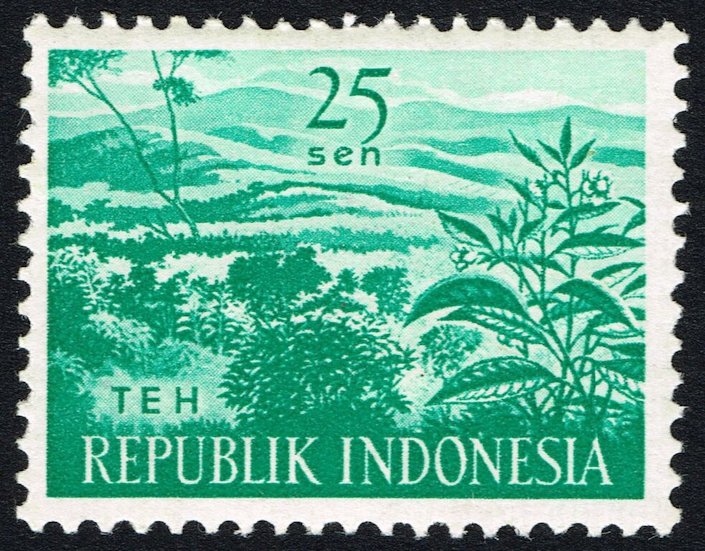
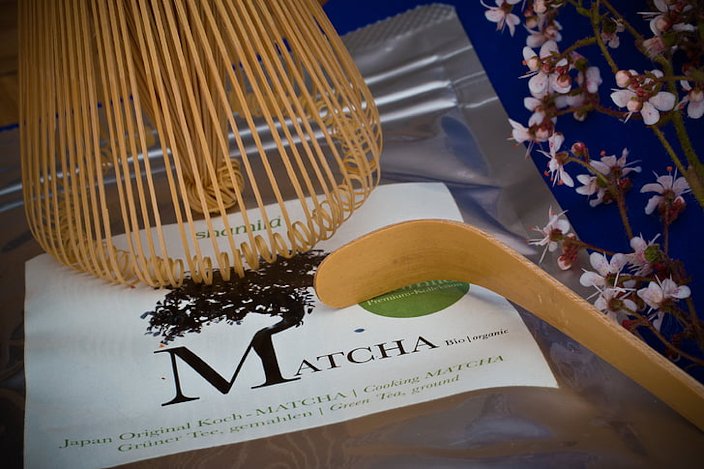
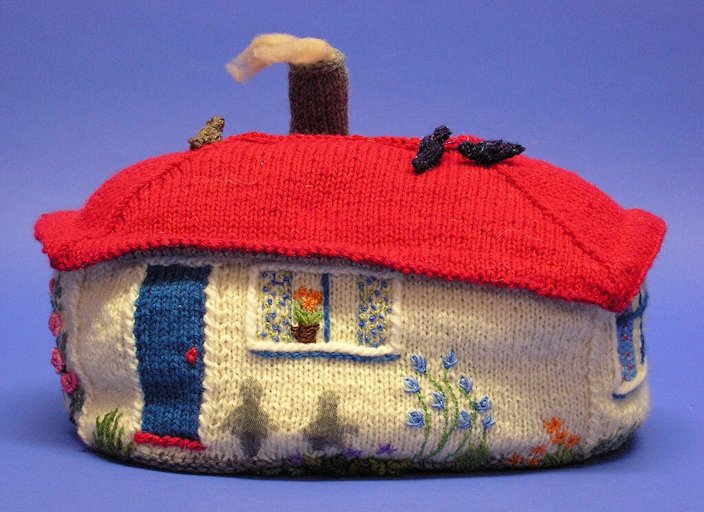
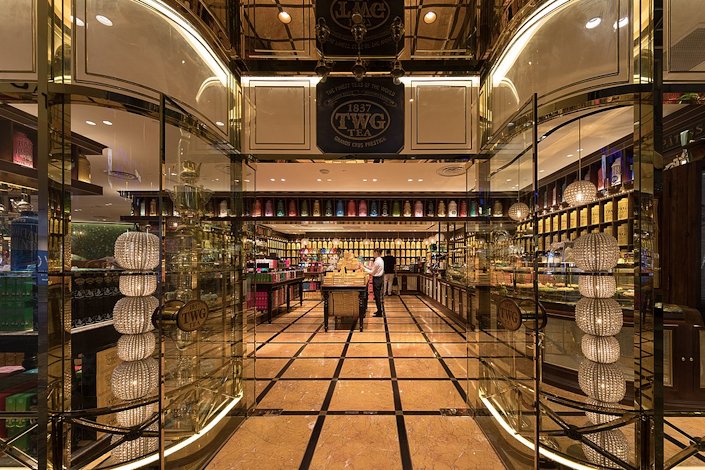
Fig. 61. Oolong from Taiwan spelling out the Chinese character for tea: 茶 Fig. 62. 1960 Stamp of Indonesia, Plants (Flora) Tea Fig. 63. Japanese bamboo matcha tea maker Fig. 64. Teacosy, house shaped, knitted commissioned from Heather Nicholson for a teacosy exhibition Fig. 65. Tea shop entrance, windows and interior, at Marina Bay Sands shopping mall, Singapore Further Reading Brewing Up the Latest Tea Research, USDA/ARS pdf Green Tea More than a Health Drink, The Japan Times, Extract from RFC Brisbane Newsletter World tea production and trade, Food and Agriculture Organization of the United Nations pdf Tea (Camellia sinensis) a New Crop for Hawai‘i, University of Hawai'i at Mānoa pdf United States tea: A synopsis of ongoing tea research and solutions to United States tea production issues, National Library of Medicine, Frontiers pdf Tea Epiccure Ext. link Botanical Art List of Growers and Vendors |
||||||||||||||||||||||||||||||||||||||||||||||||||||||||||||||||||||||||||||||||||||||||||||||
| Bibliography 1 "Tea Genetics and Breeding." UF Tea projects, AskIFAS, plantpath.ifas.ufl.edu/research/tea/projects/. Accessed 25 Nov. 2024. 2 "Camellia sinensis (L.) Kuntze. synonyms." World Flora Online, (CC0 1.0), www.worldfloraonline.org/taxon/wfo-0000582676. Accessed 25 Nov. 2024. 3 Duke, James A. "Camellia sinensis (L.) Kuntze." Handbook of Energy Crops, unpublished, 1983, www.hort.purdue.edu/newcrop/duke_energy/Camellia_sinensis.html. Accessed 26 Nov. 2024. 4 Crane, Jonathan H., and Carlos F. Balerdi. "Tea Growing in the Florida Home Landscape." Horticultural Sciences Dept., UF/IFAS Extension, HS1058, Original pub. Nov. 2005, Revised Nov. 2016, Reviewed Dec. 2019 and July 2023, AskIFAS, doi.org/10.32473/edis-hs308-2005, edis.ifas.ufl.edu/publication/HS308. Accessed 26 Nov. 2024. 5 Christman, Steve. "Camellia sinensis." Floridata, 15 Jan. 2001, Updated 1 Dec. 2003, 25 Jan. 2004, floridata.com/plant/901. Accessed 30 Jan. 2025. 6 "International Tea Day." United Nations, www.un.org/en/observances/tea-day. Accessed 10 Feb. 2025. 7 "Brewing Up the Latest Tea Research." AgResearch Magazine, U.S. Dept. of Agriculture, Agricultural Research Service, Sept. 2003, USDA/ARS, agresearchmag.ars.usda.gov/2003/sep/tea/. Accessed 10 Feb. 2025. 8 "Camellia sinensis Tree Record." SelecTree, UFEI, 1995-2025, Cal Poly State University, San Luis Obispo, selectree.calpoly.edu/tree-detail/249. Accessed 10 Feb. 2025. 9 Schoorel, A. F., and H. A. M. van der Vossen. "Camellia sinensis (L.) Kuntze." Stimulants, Plant Resources of South-East Asia No 16, Edited by H. A. M. van der Vossen, and M. Wessel, PROSEA Foundation, Bogor, Indonesia, record 606, 1991, PROSEA, (CC BY-NC-SA 3.0), www.prota4u.org/prosea/view.aspx?id=606. Accessed 3 Mar. 2025. 10 Zhang, Donglin. "Developing Tea as a Cash Crop for the Southeast." Specialty Crop Grower, 4 Dec. 2018, specialtycropgrower.com/developing-tea-as-a-cash-crop-for-the-southeast/. Accessed 6 Mar. 2025. 11 "Camellia sinensis (L.) Kuntze." India Biodiversity Portal, indiabiodiversity.org/species/show/229029. Accessed 20 Mar. 2025. 12 Walcott, S., and J. Pratt. “Tea in the USA.” International Journal of Tea Science, Vol. 8, no. 03, Oct. 2012, pp. 63-73, doi:10.20425/ijts.v8i3.4725, (CC BY), teascience.in/index.php/ijts/article/view/228. Accessed 3 Apr. 2025. 13 Orrock, James M., et al. "Performance of Seven Tea Accessions in North-central Florida: Correlations between Potential Yield and Growth Parameters over 2 Years." HortTechnology 31.6 (2021): 846-851, doi .org/10.21273/HORTTECH04908-21>. Accessed 27 Mar. 2025 14 "Camellia sinensis." North Carolina State Extention Gardener, Toolbox, plants.ces.ncsu.edu/plants/camellia-sinensis/. Accessed 22 June 2025. 15 "Taxon: Camellia sinensis (L.) Kuntze." USDA, Agricultural Research Service, National Plant Germplasm System, 2025, Germplasm Resources Information Network (GRIN Taxonomy), National Germplasm Resources Laboratory, Beltsville, Maryland, GRIN-Global, npgsweb.ars-grin.gov/gringlobal/taxon/taxonomydetail?id=8732. Accessed 22 June 2025. 16 "Camellia sinensis (L.) Kuntze." Kew Species Profiles, Plants of the World Online, Facilitated by the Royal Botanic Gardens, POWO, (CC BY-NC-SA 3.0), powo.science.kew.org/taxon/urn:lsid:ipni.org:names:828548-1/general-information. Accessed 24 June 2025. 17 "Tea." Teapedia, The Tea Encyclopedia, Last edited 4 Nov. 2024, (CC BY-SA 3.0), teapedia.org/en/Tea. Accessed 19 July 2025. 18 "Oolong." Teapedia, The Tea Encyclopedia, Last edited 14 Jan. 2025, (CC BY-SA 3.0), teapedia.org/en/Oolong. Accessed 19 July 2025. 19 "Pu-erh." Teapedia, The Tea Encyclopedia, Last edited 14 Jan. 2025, (CC BY-SA 3.0), teapedia.org/en/Pu-erh. Accessed 19 July 2025. 20 "Tea." Wikipedia, en.wikipedia.org/wiki/Tea#Cultivation_and_harvesting. Accessed 20 July 2025. 21 "Pu'er tea." Wikipedia, en.wikipedia.org/wiki/en.wikipedia.org/wiki/Pu'er_tea. Accessed 20 July 2025. Videos v1 Gebely, Tony. "What is green tea?" Tea Epicure, (CC), www.youtube.com/watch?v=4RU-clL8f9o. Accessed 25 June 2025. v2 Gebely, Tony. "What is Oolong Tea?" Tea Epicure, (CC), www.youtube.com/watch?v=YoanBK5hwUI. Accessed 25 June 2025. v3 Gebely, Tony. "What is Black Tea? And What is Your Breakfast Tea Made of?"" Tea Epicure, (CC), www.youtube.com/watch?v=E4s4wT0M1vo. Accessed 25 June 2025. v4 Gebely, Tony. "Exploring Fermented Teas." Tea Epicure, (CC), wwatch?v=2U3EWWz9n_w. Accessed 25 June 2025. v5 "Making Pu-erh tea - Step by step guide." Farmer-leaf, teapedia.org/en/Pu-erh, Mar. 2017, (CC BY-SA 3.0), www.youtube.com/watch?v=QE-aXKxPagY&t=1265s. Accessed 19 June 2025. Photographs Fig. 1 jcomp. "Oolong green tea in a teapot and bowl." Freepik, www.freepik.com/free-photo/oolong-green-tea-teapot-bowl_8885145.htm. Accessed 2 July 2025. Fig. 2 Cebeci, Zeynel. "Bud tip of tea plant (Camellia sinensis). Espiye - Giresun, Turkey." Wikimedia Commons, 7 Nov. 2018, (CC BY-SA 4.0), commons.wikimedia.org/wiki/File:Camellia_sinensis,_Giresun_2018-08-19.jpg. Accessed 1 Mar. 2025. Fig. 3,4 Ritter, M., and J. Reimer. "Camellia sinensis Charleston Tea Plantation - Charleston, SC and Strybing Arboretum - San Francisco, CA." SelecTree, UFEI, 1995-2025, Cal Poly State University, San Luis Obispo, selectree.calpoly.edu/tree-detail/249. Accessed 10 Feb. 2025. Fig. 6 Dizz. "Camillia sinensis." Teapedia, The Tea Encyclopedia, teapedia.org/en/File:Camellia-sinensis.webp. Accessed 25 June 2025. Fig. 6 Starr, Forest, and Kim. "Camellia sinensis (Tea), leaves, Kula Agriculture Station, Maui, Hawai'i." Starr Environmental, no. 120620-7480, 20 June 2012, (CC BY 4.0) www.starrenvironmental.com/images/image/?q=24515087404. Accessed 1 Mar. 2025. Fig. 7 Hückelheim, Arne. "Fresh, still undried tea leaves of different qualities in a hand; Happy Valley Tea Estate at Darjeeling, India." Wikimedia Commons, 22 Sept. 2010, (CC BY SA 3.0), GFDL, Image cropped, commons.wikimedia.org/wiki/File:TeaLeaves.JPG. Accessed 2 July 2025. Fig. 8 highnesser. "Tea leaves." Pixabay, 3 Feb. 2015, (CC0), pixabay.com/photos/tea-leaves-hands-fresh-drying-623796/. Accessed 20 July 2025. Fig. 9 Salicyna. "Camellia sinensis, Dendrological Garden in Przelewice, Poland." Wikimedia Commons, 7 Nov.2018, (CC BY-SA 4.0), commons.wikimedia.org/wiki/File:Camellia_sinensis_2018-11-07_4398.jpg. Accessed 1 Mar. 2025. Fig. 10 "Camillia sinensis flower." Hippopx, (CCO), www.hippopx.com/en/blossom-tea-camellia-sinensis-tea-leaves-white-petals-plantation-478854. Accessed 2 July 2025. Fig. 11 Lo, Shih-Kai, et al. "Relationship between Flower Phenotypic Traits and Fruit Yields in Tea (Camellia sinensis L.) Varieties." Horticulturae 9, no. 4: 440, 28 Mar. 2023, MDPI, doi.org/10.3390/horticulturae9040440. Accessed 24 June 2025. Fig. 12 Chan, W. C., Eric. "Attractive white flowers with a pinkish tinge and bright yellow stamens." Wikimedia Commons, 4 Nov. 2013, (CC BY-SA 3.0), commons.wikimedia.org/wiki/File:Camellia_sinensis_(flowers).JPG. Accessed 1 Mar. 2025. Fig. 13 Salicyna. "Camellia sinensis, Dendrological Garden in Przelewice, Poland." Wikimedia Commons, 7 Nov. 2018, (CC BY-SA 4.0), Image cropped, commons.wikimedia.org/wiki/File:Camellia_sinensis_22018-11-07_4395.jpg. Accessed 1 Mar. 2025. Fig. 14 Amada44. "Camellia sinensis." Wikimedia Commons, 25 Sept. 2011, (CC BY-SA 3.0), Image cropped, commons.wikimedia.org/wiki/File:Camellia_sinensis_4524.jpg. Accessed 1 Mar. 2025. Fig. 15 Juni. "Thea sinensis: a tea flower, Kyoto, Japan." Wikimedia Commons, via Flickr, 16 Nov. 2004, (CC BY 2.0), commons.wikimedia.org/wiki/File:Tea_plantation_in_Vythiri_2.jpg. Accessed 8 Mar. 2025. Fig. 16 Vinayaraj. "C. sinensis, flower and leaves, Wayanad, India." Wikimedia Commons, 23 Aug. 2021, (CC BY-SA 4.0), commons.wikimedia.org/wiki/File:Camellia_sinensis_-_Flower_and_leaves_-_Wayanad_2021_(2).jpg. Accessed 24 July 2025. Fig. 17 Starr, Forest, and Kim. "Camellia sinensis (Tea), Fruit, Kula Agriculture Station, Maui, Hawai'i." Starr Environmental, no. 120620-7486, 20 June 2012, (CC BY 4.0), www.starrenvironmental.com/images/image/?q=24778071789. Accessed 1 Mar. 2025. Fig. 18 Bff. "Fruits of Camellia sinensis." Wikimedia Commons, 5 June 2012, (CC BY-SA 4.0), commons.wikimedia.org/wiki/File:Camellia_sinensis20120605_06.jpg. Accessed 31 Mar. 2025. Fig. 19 Culos, Roger. "Camellia sinensis, Tea plant, seeds." Muséum de Toulouse, part of the Projet Phoebus, Wikimedia Commons, (CC BY-SA 3.0), commons.wikimedia.org/wiki/File:Camellia_sinensis_MHNT.BOT.2016.12.24.jpg. Accessed 1 Mar. 2025. Fig. 20 Keytronicx. "Dried tea fruit, from left to right: tea fruit seed, empty tea fruit hull, slightly cracked tea fruit, and dry intact tea fruit." Wikimedia Commons, 7 Mar. 2024, (CC BY-SA 4.0), Image cropped, commons.wikimedia.org/wiki/File:Tea_fruit_seed.jpg. Accessed 31 Mar. 2025. Fig. 21 "Tea plant (Camellia sinensis 'Yabukita')." ARS, USDA, 5 May 2005, Wikimedia Commons, Public Domain, commons.wikimedia.org/wiki/File:Camellia_sinensis_USDA.jpg. Accessed 1 Mar. 2025. Fig. 22 Pinus. "Camellia sinensis (L.) Kuntze." India Biodiversity Portal, Biodiversity India, (CC BY 4.0), indiabiodiversity.org/files-api/api/get/raw/img//Camellia sinensis/Camellia_sinensis_5.jpg. Accessed 13 Feb. 2025. Fig. 23 chrisaliv. "Tea Garden, Monte Verità, Ascona, Switzerland." Wikimedia Commons, 28 Aug. 2021, (CC BY-SA 4.0), commons.wikimedia.org/wiki/File:20210828_Monte-Verità_Ascona-20.tif. Accessed 31 Mar. 2025. Fig. 24 റജി ജേയ്ക്കബ് . "The root of a tea plant. The plant must be over 100 years old." Wikimedia Commons, 6 June 2011, (CC BY-SA 3.0), commons.wikimedia.org/wiki/File:തേയിലച്ചെടിയുടെ_വേരുപടലം.jpg. Accessed 8 Mar. 2025. Fig. 25 Rightee. "A tea plantation in India with a road visible." Wikimedia Commons, via Flickr, 7 Feb. 2005, (CC BY 2.0), commons.wikimedia.org/wiki/File:Tea_plantation_with_road_and_trees.jpg. Accessed 8 Mar. 2025. Fig. 26 Gagnon, Bernard. "Woman harvesting tea, West Bengal, India." Wikimedia Commons, 18 May 2018, GFDL, (CC BY-SA 4.0), (CC BY-SA 3.0), (CC BY-SA 2.5), (CC BY-SA 2.0), (CC BY-SA 1.0), commons.wikimedia.org/wiki/File:Woman_harvesting_tea,_West_Bengal.jpg. Accessed 1 Mar. 2025. Fig. 27 예향. "Jakseol green tea leaves, 녹찻잎(작설차)." Wikimedia Commons, 26 Apr. 2017, (CC BY 2.0 KR), commons.wikimedia.org/wiki/File:Jakseol_green_tea_leaves.jpg. Accessed 18 July 2025. Fig. 28 Verch, Marco. "Dried green tea leaves." Wuestenigel, (CC BY 2.0), foto.wuestenigel.com/dried-green-tea-leaves/. Accessed 2 July 2025. Fig. 29 Ausmus, Steve. "Leaves from the plant Camellia sinensis are processed three different ways..." U.S. Dept. of Agriculture, Agricultural Research Service, 6 Nov. 2023, USDA/ARS, Public Domain, www.ars.usda.gov/oc/images/photos/featuredphoto/feb19/tea/. Accessed 10 Feb. 2025. Fig. 30 Haneburger. "Tea of different fermentation: From left to right: Green tea (Bancha from Japan), Yellow tea (Kekecha from China), Oolong tea (Kwai flower from China) and Black tea (Assam Sonipur Bio FOP from India)." Wikimedia Commons, 29 Dec. 2009, Public Domain, commons.wikimedia.org/wiki/File:Tea_in_different_grade_of_fermentation.jpg. Accessed 20 July 2025. Fig. 31 Voekler, T. "Brick tea - Most tea bricks 'Zhuan Cha’ are from Southern Yunnan in China, and parts of Sichuan Province. Tea bricks are made primarily from the broad leaf 'Dayeh' Camellia Assamica tea plant. Tea leaves have been packed in wooden moulds and pressed into block form." Wikimedia Commons, 27 Oct. 2007, (CC BY SA 3.0), commons.wikimedia.org/wiki/File:Brick_tea_4897.jpg. Accessed 20 July 2025. Fig. 32 "Gaiwan." Teapedia, The Tea Encyclopedia, 20 Sept. 2024, (CC BY-SA 3.0), teapedia.org/en/File:Gaiwan.jpg. Accessed 19 July 2025. Fig. 33 静葉. "Tea bricks, tea cakes, tea lumps, and tea nuggets" Wikimedia Commons, 1 June 2011, GFDL, (CC BY-SA 3.0), (CC BY-SA 2.5), (CC BY-SA 2.0), (CC BY-SA 1.0), commons.wikimedia.org/wiki/File:110601_204646.jpg. Accessed 20 July 2025. Fig. 34 "Wrapping Pu-erh tea cakes." Teapedia, The Tea Encyclopedia, Last edited 14 Jan. 2025, (CC BY-SA 3.0), teapedia.org/en/Pu-erh. Accessed 19 July 2025. Fig. 35,36 User Tm. "Tea Caddy." Wikimedia Commons, Originally posted to Flickr by Auckland Museum Collections, 14 May 2020, (CC BY 4.0), Image cropped, commons.wikimedia.org/wiki/File:Tea_eggs_3.jpg. Accessed 9 June 2025. Fig. 37 User Rept0n1x. "Wooden tea caddy from China on display at the Museum of Liverpool, England." Wikimedia Commons, 25 July 2011, (CC BY 3.0), commons.wikimedia.org/wiki/File:Wooden_tea_caddy,_Museum_of_Liverpool.jpg. Accessed 9 June 2025. Fig. 38 User Pharos. "British Tea chest with tea caddies." Wikimedia Commons, 29 Dec. 2017, c. 1790, Public Domain, commons.wikimedia.org/wiki/File:Tea_chest_with_tea_caddies_MET_DP-14129-087.jpg. Accessed 22 June 2025. Fig. 39 SharonDawn. "Transporting fresh harvested tea leaves!" Wikimedia Commons, 17 May 2019, (CC BY 4.0), Image cropped, commons.wikimedia.org/wiki/File:Tea_transportation.jpg. Accessed 22 June 2025. Fig. 40 Gebely, Tony. "Tea Processing Chart." Tea Epicure, 13 Feb. 2024, www.patreon.com/TonyGebely. Accessed 25 June 2025. Fig. 41 xuanduongvan87. "Tea plantation Vietnam." Pixabay, 3 Feb. 2015, (CC0), pixabay.com/photos/vietnam-farming-agriculture-6634082/. Accessed 20 July 2025. Fig. 42 Starr, Forest, and Kim. "Camellia sinensis (Tea), Crop trials Mealani Ag Station Waimea, Hawai'i, Hawai'i." Starr Environmental, no. 120718-9177, 18 July 2012, (CC BY 4.0), www.starrenvironmental.com/images/image/?q=24893549320. Accessed 1 Mar. 2025. Fig. 43 Athulvis. "Tea plantation in Vythiri, Kerala, India." Wikimedia Commons, 3 Mar. 2024, (CC BY-SA 4.0), commons.wikimedia.org/wiki/File:Tea_plantation_in_Vythiri_2.jpg. Accessed 1 Mar. 2025. Fig. 44 Kübelbeck, Armin. "Tea bushes Camellia sinesis in Hangzhou (China, Province Zhejiang). Longjing (Dragon Well Tea)." Wikimedia Commons, 3 Nov. 2007, (CC BY-SA 3.0), commons.wikimedia.org/wiki/File:Camellia_sinensis_02.jpg. Accessed 8 Mar. 2025. Fig. 45 QueeNia, Pro. "Breathtaking view at BOH Sungei Palas Tea Plantation, Cameron Highlands, Pahang." Wikimedia Commons, 15 Oct. 2019, (CC BY-SA 4.0), commons.wikimedia.org/wiki/File:Breathtaking_view_at_BOH_Sungei_Palas_Tea_Plantation,_Cameron_Highlands.jpg. Accessed 8 Mar. 2025. Fig. 46 tornado_twister. "Tea estate in Munnar, Kerala, India." Wikimedia Commons, via Flickr, 2 Jan. 2010, (CC BY 2.0), Image cropped by Globe-trotter, commons.wikimedia.org/wiki/File:Tea_estate_in_Munnar.jpg. Accessed 9 Mar. 2025. Fig. 47 Ausmus, Steve. "Next to water, tea is the most consumed beverage worldwide." U.S. Dept. of Agriculture, Agricultural Research Service, 10 Dec. 2020, USDA/ARS, Public Domain, www.ars.usda.gov/oc/images/photos/sep03/k10695-2/. Accessed 10 Feb. 2025. Fig. 48 Wong, Wei-Te. "Green tea roll cake, Seoul, Korea." Wikimedia Commons, via Flickr, 5 Apr. 2015, (CC BY-SA 4.0), Image cropped, commons.wikimedia.org/wiki/File:Green_tea_roll_cake.jpg. Accessed 9 Mar. 2025. Fig. 49 Mahanga. "Green tea ice cream." Wikimedia Commons, 10 Aug. 2009, GFDL, (CC BY-SA 3.0), Image cropped, commons.wikimedia.org/wiki/File:Green_tea_ice_cream.jpg. Accessed 9 Mar. 2025. Fig. 50 Eftimova, Daniela. "Chinese boiled eggs in black tea." Wikimedia Commons, 8 Oct 2017, (CC BY-SA 4.0), commons.wikimedia.org/wiki/File:Tea_eggs_3.jpg. Accessed 9 June 2025. Fig. 51 Verch, Marco. "Matcha cheesecake with chocolate fudge." Wuestenigel, (CC BY 2.0), foto.wuestenigel.com/close-up-of-matcha-cheesecake-with-chocolate-fudge/. Accessed 2 July 2025. Fig. 52 Maulana, Irvan Ary. "A mug of matcha tea latte with "Rosetta" latte art served in restaurant in Sukabumi Regency, West Java, Indonesia." Wikimedia Commons, 8 Jan. 2022, (CC BY SA 4.0), Image cropped, commons.wikimedia.org/wiki/File:Matcha_tea_latte_with_rosetta_latte_art.jpg. Accessed 20 July 2025. Fig. 53 Doroquez, Melissa. "Iced tea with lemon." Flickr, 18 Mar. 2010, (CC BY SA 3.0), www.flickr.com/photos/62967061@N00/4443696145 . Accessed 22 July 2025. Fig. 54 Gisling. "A teahouse in the Nanjing Presidential Palace garden, China." Wikimedia Commons, 1 Oct. 2007, GFDL, (CC BY-SA 3.0), commons.wikimedia.org/wiki/File:Teahouse-Nanjing.jpg. Accessed 9 Mar. 2025. Fig. 55 Huber, Gerhard. "Marble House, Chinese Tea House, Newport, US." Global Geogaphy, Oct. 2013, (CC BY-SA 4.0), global-geography.org/af/Geography/America/United_States/Pictures/Newport/Marble_House_-_Chinese_Tea_House. Accessed 9 Mar. 2025. Fig. 56 Daderot. "Japanese Tea Garden, Golden Gate Park, San Francisco, California, USA." Wikimedia Commons, 5 Nov. 2013, GFDL, (CC BY-SA 4.0), commons.wikimedia.org/wiki/File:Japanese_Tea_Garden_(San_Francisco)_-_DSC00260.JPG. Accessed 9 Mar. 2025. Fig. 57 AuburnPilot. "The Tea House within the 7.5 acre Japanese Garden at the Birmingham Botanical Gardens in Birmingham, Alabama USA." Wikimedia Commons, 8 Mar. 2009, Public Domain, commons.wikimedia.org/wiki/File:Birmingham_Botanical_Gardens_-_Tea_House.jpg. Accessed 9 Mar. 2025. Fig. 58 Rubenstein. "Tea house in Japanese garden, Hamburg." Wikimedia Commons, via Serbian Wikipedia, 6 Aug. 2010, (CC BY-SA 3.0 RS), commons.wikimedia.org/wiki/File:Tea_house_hamburg.jpg. Accessed 9 Mar. 2025. Fig. 59 Rubenstein. "Interior shot of the Russian Tea Room restaurant in New York City." Wikimedia Commons, via Flickr, 3 Nov. 2009, (CC BY 2.0), commons.wikimedia.org/wiki/File:Interior_of_the_Russian_Tea_Room.jpg. Accessed 9 Mar. 2025. Fig. 60 Walton, Payton. "Savoy Hotel, Tea Shop, London." Wikimedia Commons, 1 May 2018, (CC BY-SA 4.0), commons.wikimedia.org/wiki/File:Savoy_Hotel_Tea_Shop.jpg. Accessed 9 Mar. 2025. Fig. 61 Oxborrow, Toby. "Oolong from Taiwan spelling out the Chinese character for tea: 茶." Wikimedia Commons, 1 Mar. 2007, (CC BY 2.0), commons.wikimedia.org/wiki/File:Oolong_tea_leaves_-_character_for_tea_in_Chinese.jpg. Accessed 9 Mar. 2025. Fig. 62 Post of Indonesia. "1960 Stamp of Indonesia, Plants (Flora) Tea." Wikimedia Commons, 10 Aug. 2009, Public Domain, commons.wikimedia.org/wiki/File:Stamp_of_Indonesia_-_1960_-_Colnect_232483_-_Tea_Camellia_sinensis.jpeg. Accessed 9 Mar. 2025. Fig. 63 "Japanese bamboo matcha tea maker." Hippopx, (CC0), www.hippopx.com/en/matcha-tea-tea-ceremony-matcha-tee-japan-tradition-tea-maker-234521. Accessed 2 July 2025. Fig. 64 Nicholson, Heather. "Teacosy, house shaped, knitted commissioned from Heather Nicholson for a teacosy exhibition." Wikimedia Commons, 26 Apr. 2017, Collection of Auckland War Memorial Museum Tāmaki Paenga Hira, 2002.41.1, c. Nov. 1992, 19 Apr .2002, c. 1993, (CC BY 4.0), commons.wikimedia.org/wiki/File:Teacosy_(AM_2002.41.1-2).jpg. Accessed 23 July 2025. Fig. 65 Morin, Basile. "Tea shop entrance, windows and interior, at Marina Bay Sands shopping mall, Singapore." Wikimedia Commons, 5 June 2018, (CC BY SA 4.0), commons.wikimedia.org/wiki/File:TWG_Tea_shop_entrance_in_Singapore.jpg. Accessed 18 July 2025. Fig. 66 Bradshaw, Joel. "Giant teapot outside Tân Cương Tea Factory, Thai Nguyen City, Vietnam." Wikimedia Commons, 4 June 2012, Public Domain, Image cropped, commons.wikimedia.org/wiki/File:Tea-pot.JPG. Accessed 9 Mar. 2025. * UF/IFAS Assessment of Non-native Plants in Florida's Natural Areas ** The information provided above is not intended to be used as a guide for treatment of medical conditions using plants. Published 24 July 2025 LR |
|||||||||||||||||||||||||||||||||||||||||||||||||||||||||||||||||||||||||||||||||||||||||||||||